The location of a bird feeder can make a small balcony easier or harder to manage. A feeder placed in the right spot is easier to refill, easier to clean, and less likely to create seed mess near doors, furniture, or neighboring balconies.
There is no perfect location for every apartment. The best spot depends on the balcony layout, wind exposure, railing design, and how close you are to other residents. A practical setup starts with safety and simple maintenance.
Start with a spot you can reach safely
Choose a location that you can reach comfortably from inside the balcony. You should be able to refill the feeder, remove old seed, and clean the area without leaning over the railing or standing on unstable furniture.
A feeder that is difficult to reach may seem manageable at first, but regular cleaning becomes harder over time. Keep the setup close enough to access safely while leaving room to walk, sit, and open the balcony door.
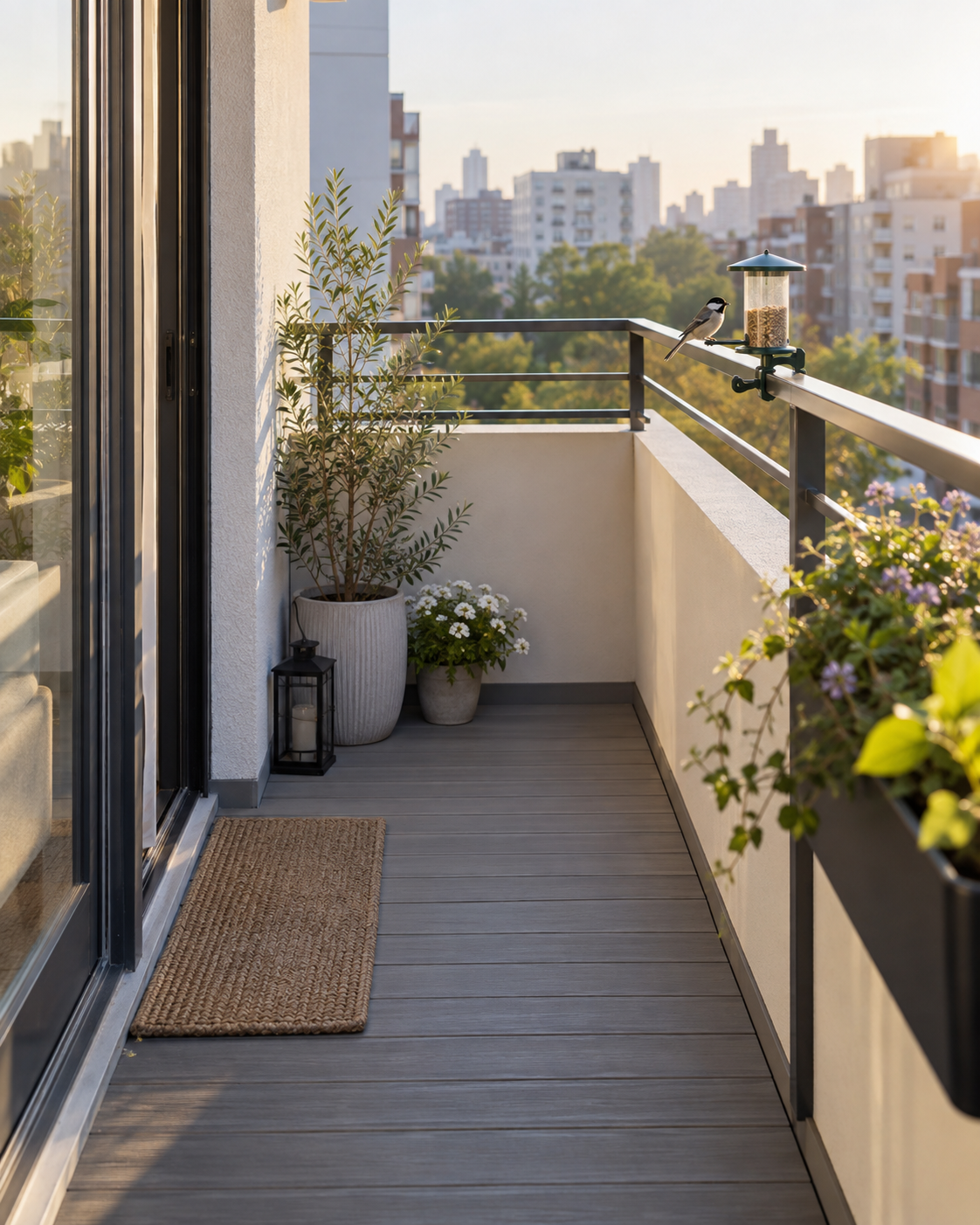
If your balcony is narrow, place the feeder toward one end instead of in the center of the walking path.
Keep the feeder away from doors and seating areas
Avoid putting a feeder directly beside a door or above a chair, table, or outdoor rug. Birds can drop seed hulls while feeding, and wind may carry small pieces farther than expected.
Leaving a little distance between the feeder and your usual seating area makes cleanup easier. It also helps keep food away from places where people set drinks, eat, or move through the balcony.
A corner near the railing may work well when it does not interfere with the door or create a hazard for anyone using the space.
Use the railing carefully
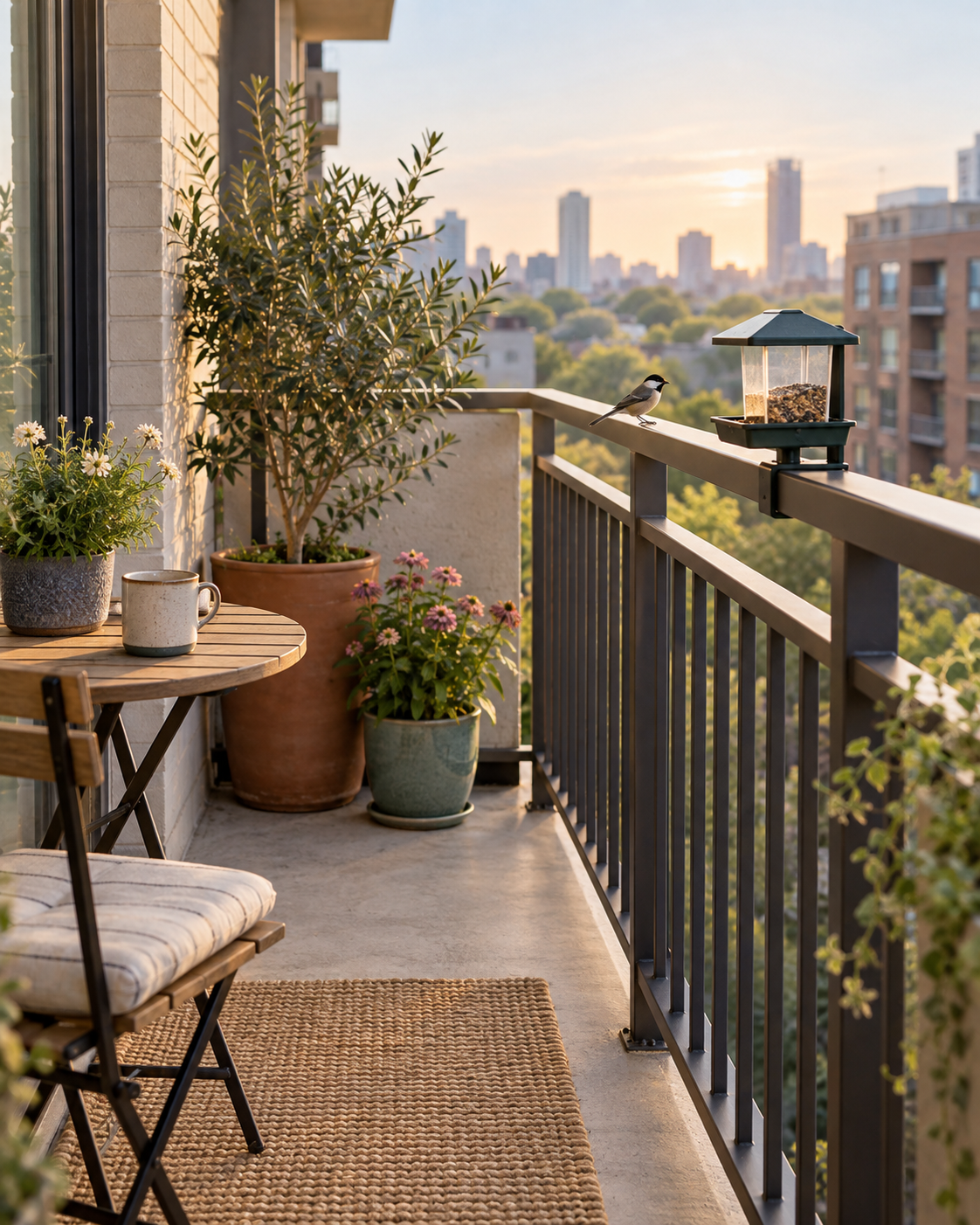
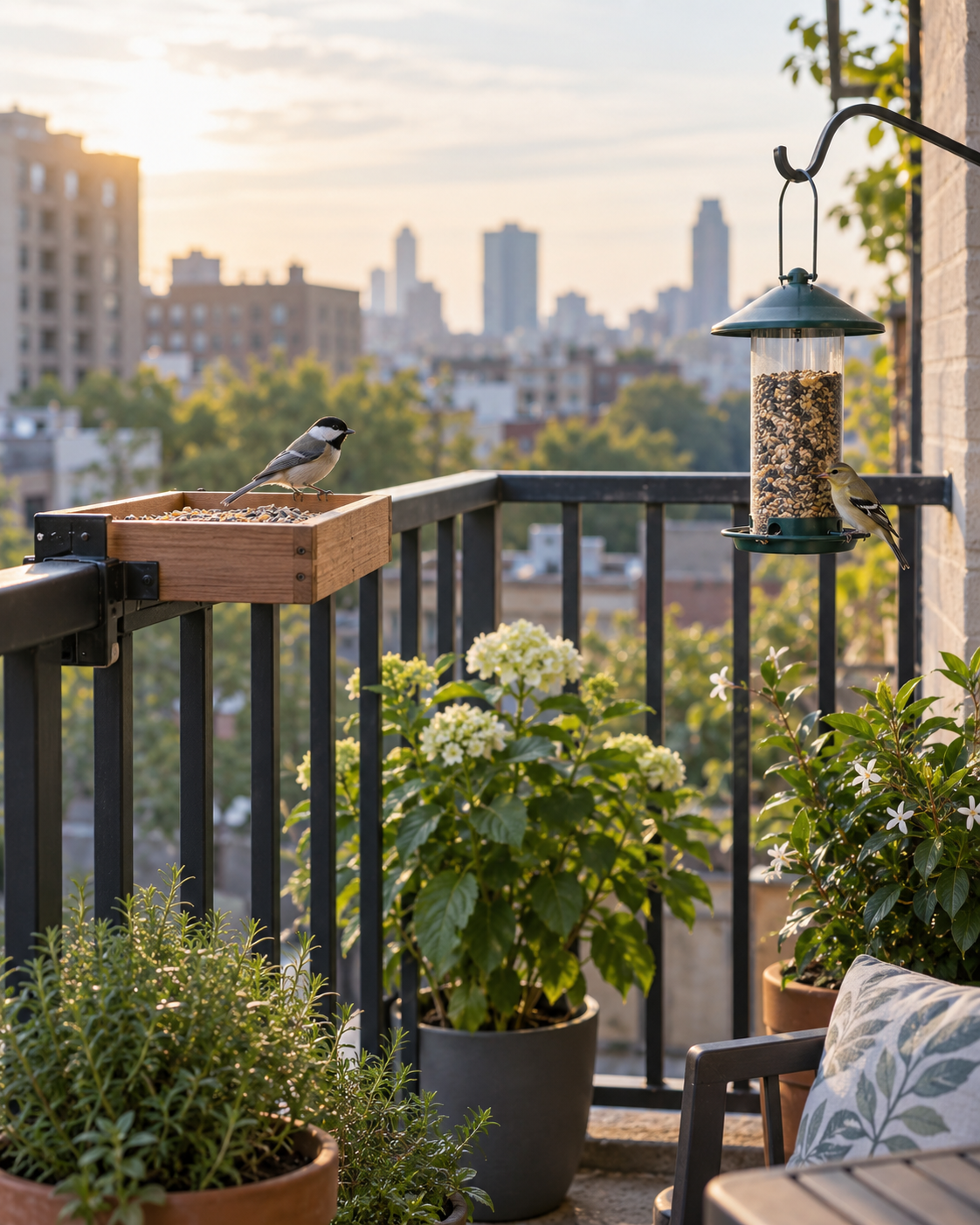
A railing can be a useful location because it keeps the feeder visible to birds and saves floor space. However, it should be mounted securely and should not extend into a shared walkway or hang where seed can easily fall onto another resident’s balcony.
Check whether the railing is stable and whether the feeder attachment fits properly. Do not force a mount onto a railing that is too wide, too narrow, or shaped in a way that prevents a secure connection.
For help choosing a feeder style that fits your available space, see How to Choose a Bird Feeder for a Small Balcony.
Consider wind before choosing the final location
Wind can turn a tidy feeder setup into a messy one. An exposed corner may look convenient, but strong wind can move a hanging feeder, blow seed from an open tray, and scatter hulls across the balcony.
Look for a location with some protection from a wall, side panel, or covered area. The feeder still needs to be visible and accessible, but it does not need to sit in the most exposed part of the railing.
After placing the feeder, observe it for a few days. If seed keeps blowing into a corner or against the door, move the feeder slightly and reduce the amount of seed you add at one time.
Keep seed away from neighboring balconies
Apartment balconies often sit directly above, below, or beside other homes. Think about where loose seed may land before you fill the feeder.
Avoid placing a feeder above the edge that faces a neighbor’s balcony below. Also avoid locations where wind could push seed into a shared walkway or toward another resident’s window.
A small feeder with a modest amount of seed is easier to manage than a large feeder that stays full all the time. For practical ways to reduce dropped seed, read How to Keep Bird Seed From Falling on Your Apartment Balcony.
Place the feeder where you can monitor it
One of the advantages of feeding birds from a balcony is being able to observe the setup closely. Choose a location you can see from indoors or notice when you step outside.
Being able to monitor the feeder helps you see when seed becomes wet, when the feeder needs cleaning, or when a location is creating more mess than expected. It also helps you notice whether birds are comfortable using the feeder.
Do not place the feeder behind large furniture, dense plants, or stored items that make it difficult to check.
Think carefully about windows
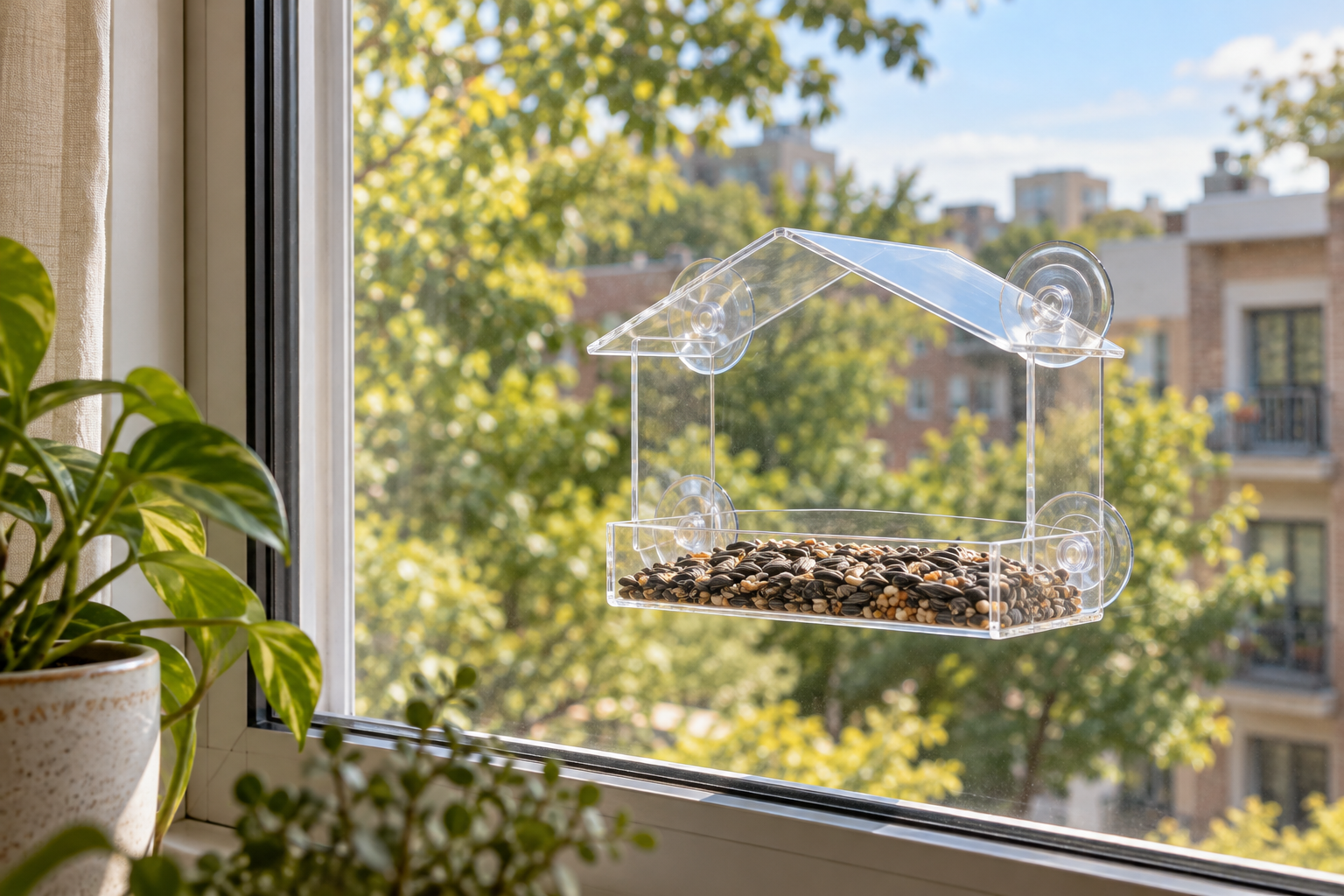
A feeder near a window can make bird watching enjoyable, but the location should be practical and safe. Keep the feeder secure and make sure it is not placed where birds may fly quickly toward a glass reflection.
If you are using a feeder designed for a window, follow its mounting instructions and check it regularly. For other feeder styles, a little distance from the glass may work better depending on the balcony layout.
For options designed specifically for windows and small spaces, see Best Window Bird Feeders for Apartments and Small Spaces.
Leave room for cleaning
The space below and around the feeder should be easy to sweep or wipe. Avoid placing it over a crowded group of pots, outdoor cushions, or areas where debris will be difficult to remove.
A feeder is easier to maintain when you can quickly check the surface beneath it. Keep a small brush or cleaning cloth nearby so you can remove hulls and loose seed before they build up.
Regular cleaning helps keep the area more comfortable for you, the birds, and your neighbors. For a simple routine, see How to Clean a Bird Feeder on an Apartment Balcony.
Check building rules before installing anything
Before attaching a feeder to a railing or hanging one from a ceiling support, check your building rules. Some apartments have specific restrictions about balcony items, feeding wildlife, or objects attached to railings.
It is also helpful to consider how the feeder may affect the people who live nearby. A quiet, tidy setup is usually easier to maintain than one that creates frequent seed spills or attracts too much activity in a shared area.
For more guidance, read Can You Feed Birds on an Apartment Balcony? Rules, Safety, and Neighbor Considerations.
Final thoughts
The best place for a bird feeder is one that is safe to reach, protected from excessive wind, and easy to keep clean. It should fit your balcony without blocking doors or creating extra work for you or your neighbors.
Start with one small feeder in a manageable location. Observe how it performs, then make small changes based on seed mess, weather, and the way birds use the space.