A small apartment balcony can become a pleasant place to watch birds without turning into a complicated project. You do not need a large outdoor space. What matters most is creating a setup that is safe, tidy, and realistic for your daily routine.
A bird-friendly balcony should be easy for you to maintain and considerate of the people living nearby. Start with a simple plan, observe how the space works, and make small adjustments over time.
Begin with a safe, usable space
Before adding a feeder or plants, look at how you use your balcony every day. Keep doors, chairs, walkways, and storage areas clear. A bird setup should not create a tripping hazard or make it difficult to move around.
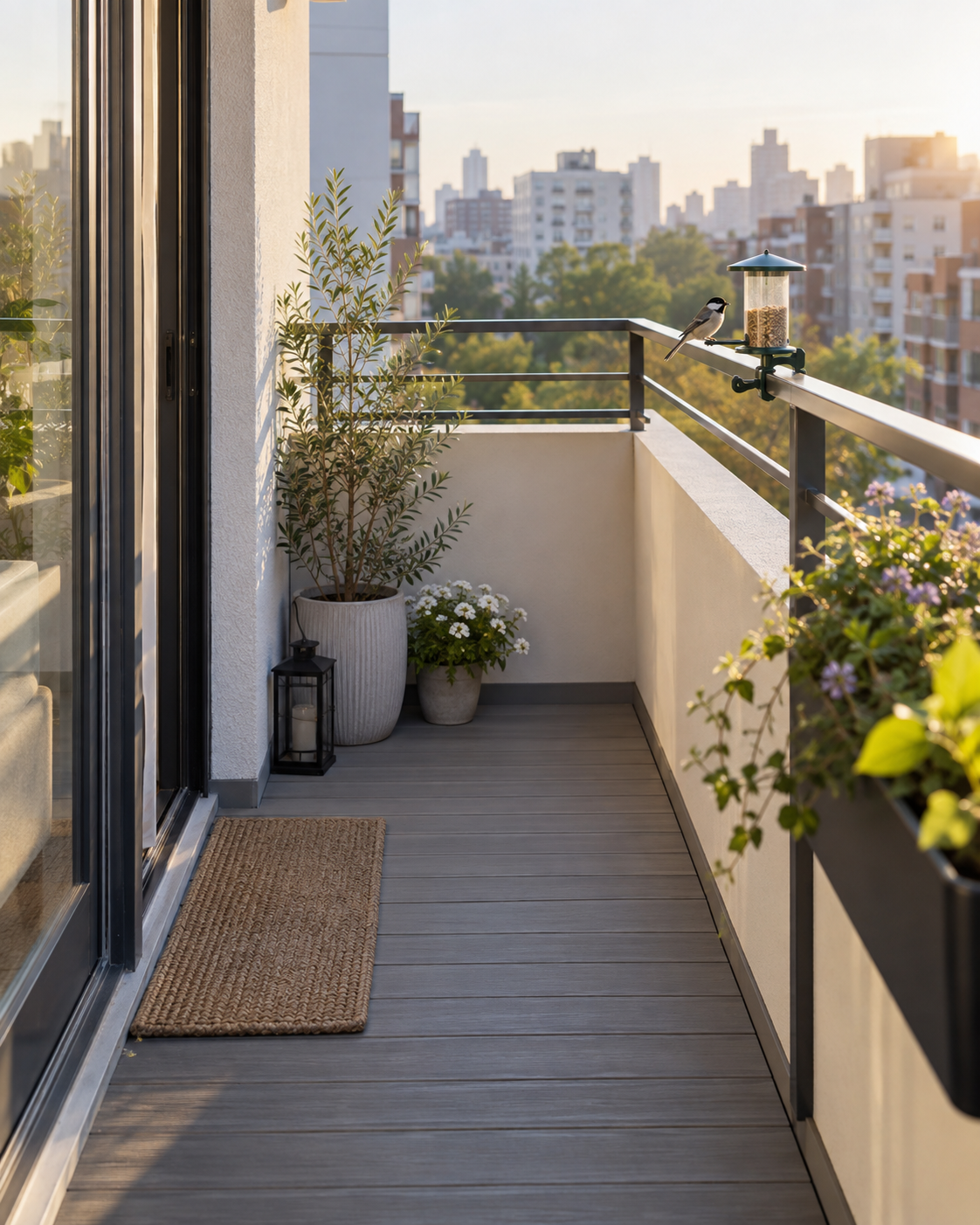
Choose one small area for bird activity instead of spreading seed and accessories across the entire balcony. A protected corner near a wall can be useful, as long as you can reach it safely from indoors.
Avoid leaning far over the railing to refill a feeder or clean up seed. If a setup is difficult to reach, it will be harder to maintain consistently.
Add one simple feeder setup
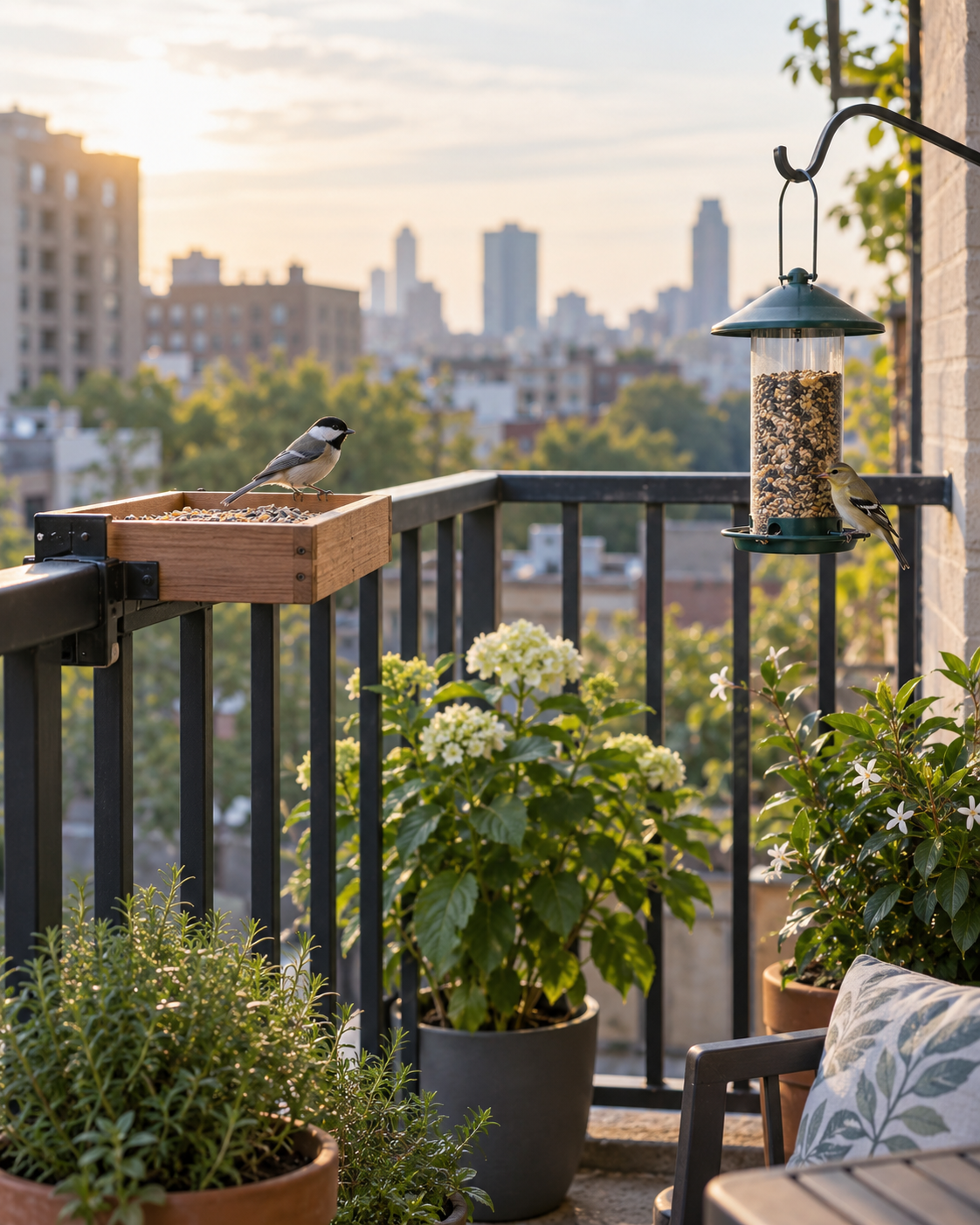
Starting with one feeder makes it easier to learn what works in your space. It also helps you monitor seed use, weather exposure, and cleanup before adding anything else.
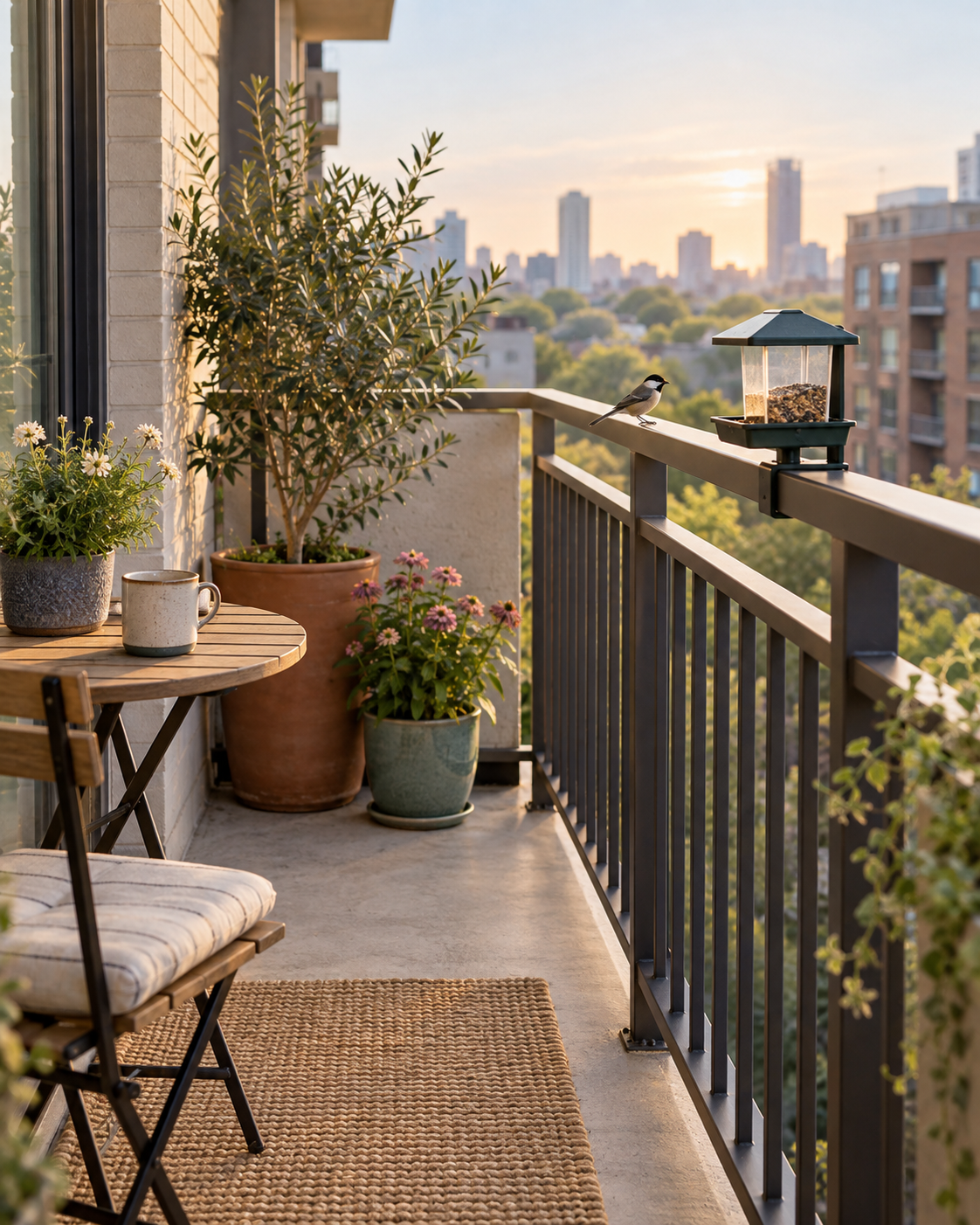
Choose a feeder style that fits the available room and has a secure mounting point. A railing feeder, small tray feeder, or hanging feeder may work depending on the balcony layout. The important part is that it remains stable and does not block the area where people walk or sit.
For help choosing a practical option, read How to Choose a Bird Feeder for a Small Balcony.
Keep seed and water away from problem areas
Seed should stay contained as much as possible. Avoid placing a feeder directly above a neighbor’s balcony, a shared walkway, or a place where dropped seed could collect near a door.
Start with a small amount of seed. This gives you time to see how quickly birds eat it and whether wind carries hulls or loose seed across the balcony. Refill only what the birds are likely to use soon.
A simple cleanup routine is more helpful than adding too much food. For guidance on reducing scattered seed, see How to Keep Bird Seed From Falling on Your Apartment Balcony.
Choose low-mess seed carefully
The type of seed you offer affects how easy the balcony is to maintain. Some seed mixes create more hulls and waste than others. Birds may also scatter seeds they do not want while searching for their preferred pieces.
Choose a seed option that suits the birds in your area and your ability to clean the space. Use only enough for a short period, especially after rain or during humid weather. Wet seed can clump, spoil, and create extra work.
For more detail, see Best Bird Seed for Apartment Balconies: Low-Mess Choices and What to Avoid.
Include simple plants when they fit your space
Plants can make a balcony feel calmer and more inviting. They may also provide a little visual cover for birds while helping the space feel more natural.
Choose plants you can care for in the amount of sun your balcony receives. Keep pots stable and avoid crowding the railing. A balcony does not need to look like a garden to be bird-friendly. A few well-placed containers are enough.
Keep in mind that plants should not prevent you from cleaning around the feeder. Make sure you can still sweep seed hulls, wipe surfaces, and check the feeding area easily.
Keep windows in mind
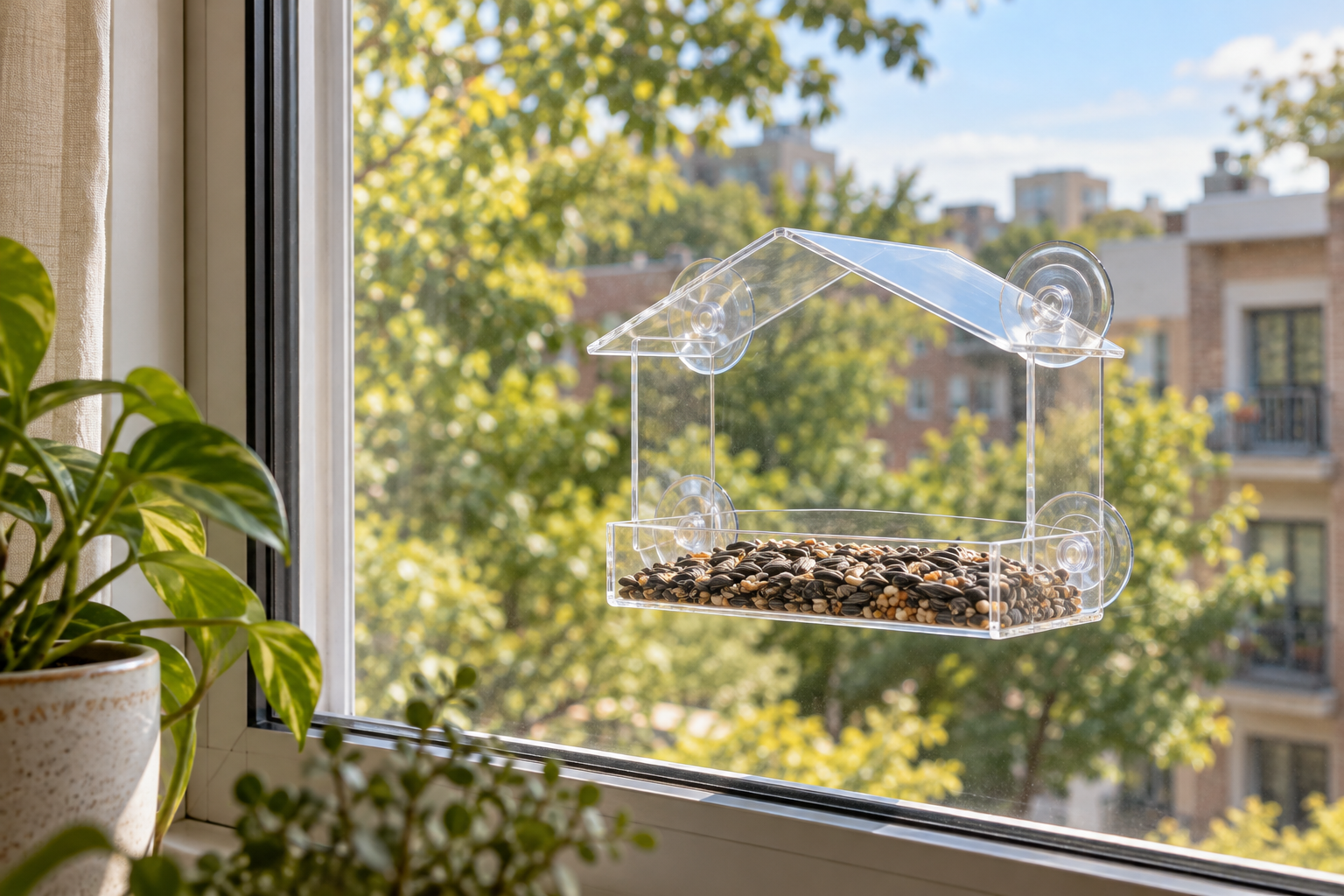
Birds may not always see glass clearly. A feeder placed close to a window can give you a good view, but the location should still be thoughtful.
Avoid placing a feeder in a spot where a bird might fly quickly toward a reflection. If you use a window feeder, make sure it is secure and easy to inspect. A window setup may be useful in some apartments, but it is not the only option for a small space.
For ideas about window-based feeding, read Best Window Bird Feeders for Apartments and Small Spaces.
Make cleaning part of the setup
A bird-friendly balcony needs regular attention. Remove old seed, check for wet areas, and clean the feeder before debris builds up. Keeping the area dry and tidy is better for birds and more comfortable for you and your neighbors.
It helps to keep a small brush, cloth, or container nearby so that cleanup does not become a large task. A few minutes of maintenance can prevent seed from collecting in corners or beneath furniture.
For a practical routine, see How to Clean a Bird Feeder on an Apartment Balcony.
Respect neighbors and building rules
Bird feeding can be enjoyable, but apartment balconies are often close together. Check building rules before installing a feeder, hanging anything from the railing, or leaving food outdoors.
Be mindful of seed falling below, birds gathering in large numbers, and any mess that could affect a shared space. A small, managed setup is usually more neighbor-friendly than a large feeder that is constantly full.
If you need help thinking through these issues, read Can You Feed Birds on an Apartment Balcony? Rules, Safety, and Neighbor Considerations.
Observe before expanding
After you set up the balcony, give it time. Notice where birds land, whether the feeder stays dry, and how much cleanup is needed. You may find that moving a feeder a short distance or reducing the amount of seed makes a big difference.
A bird-friendly space develops gradually. There is no need to add several feeders, decorations, or large containers at once. Start with what you can manage well, then improve the setup based on what you observe.
Final thoughts
Making a small apartment balcony more bird-friendly is mostly about thoughtful choices. Keep the setup safe, easy to reach, and easy to clean. Use a modest amount of seed, place the feeder carefully, and respect the shared nature of apartment living.
A simple balcony that you can maintain regularly can be a welcoming place for birds and a relaxing place for you to enjoy them.