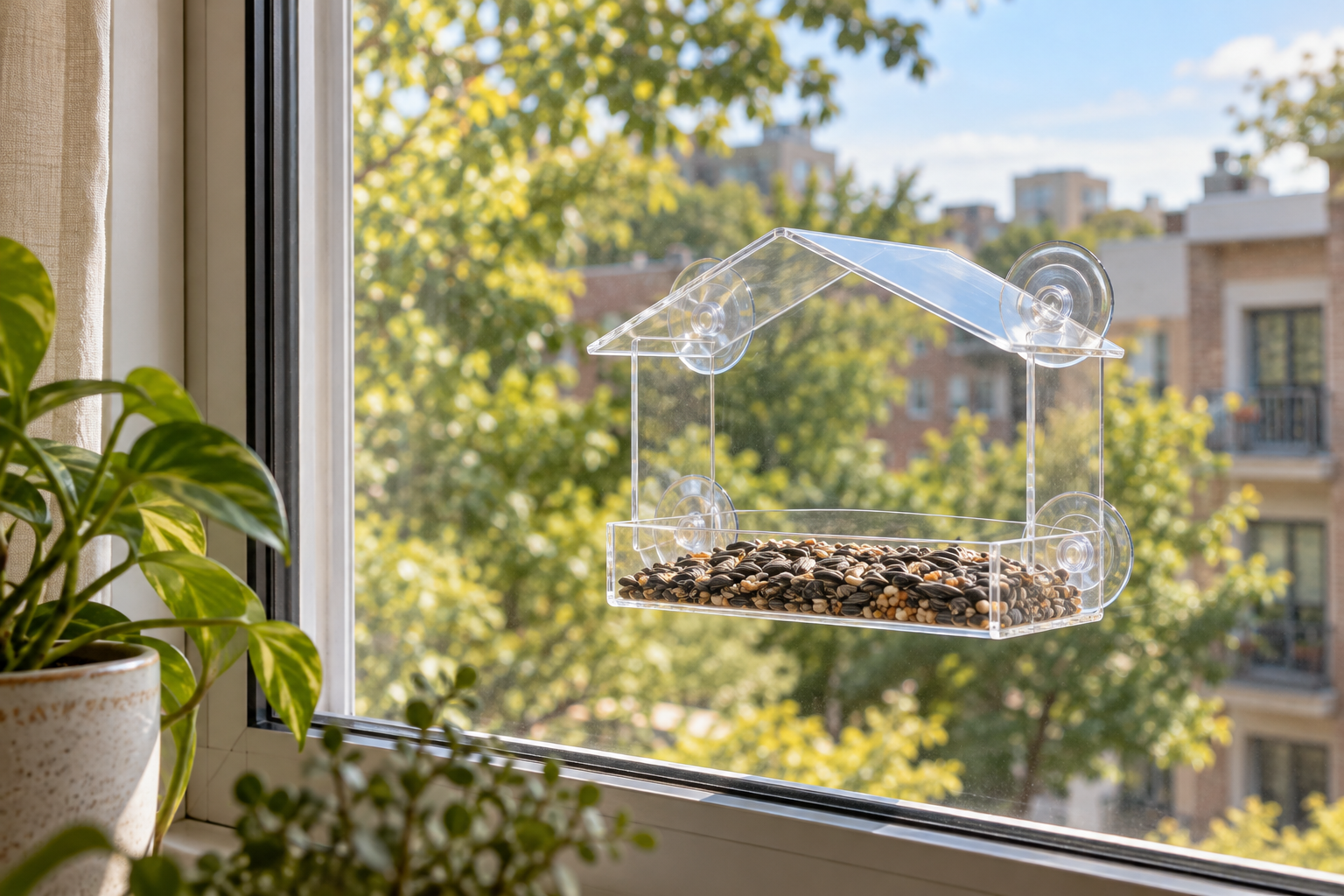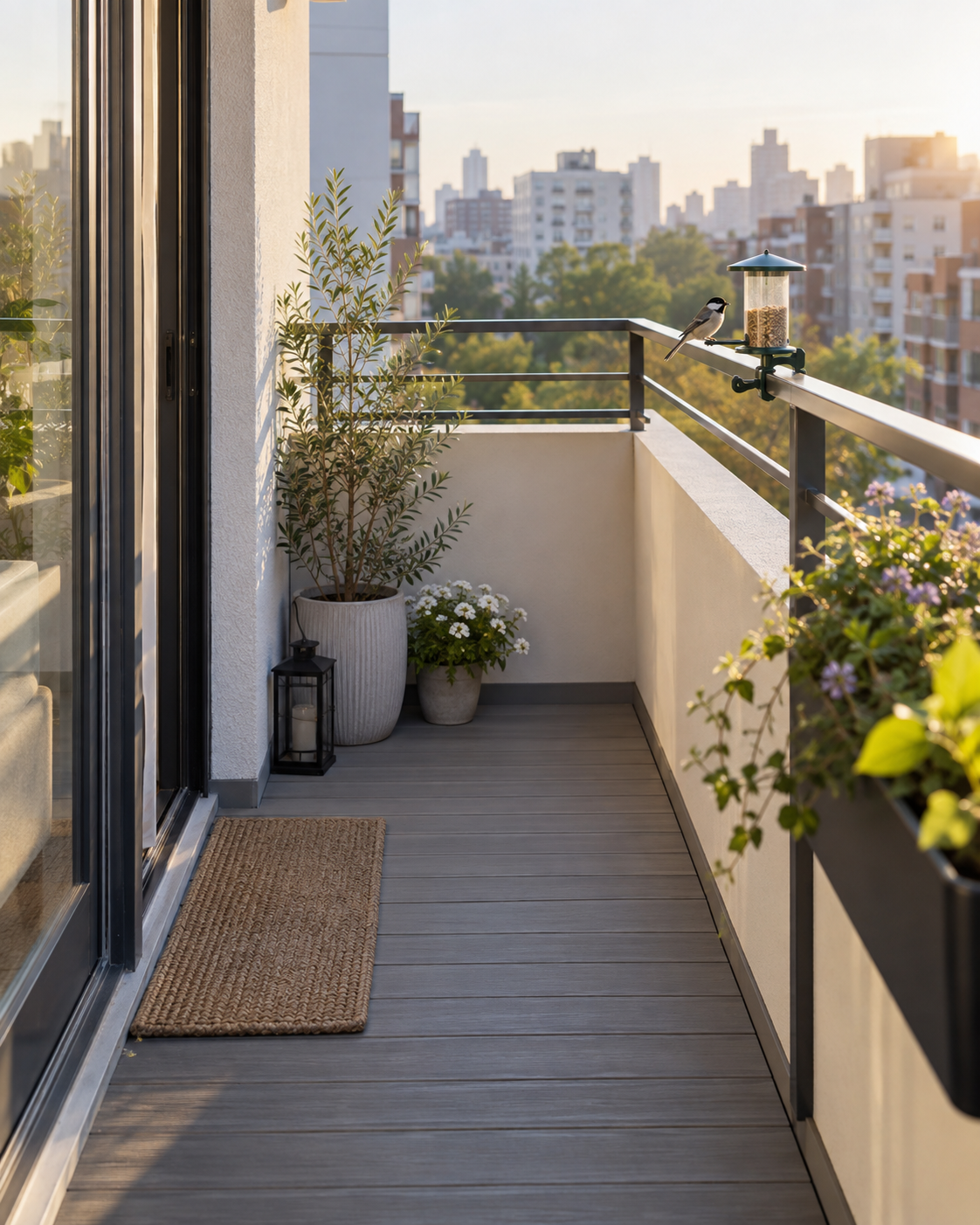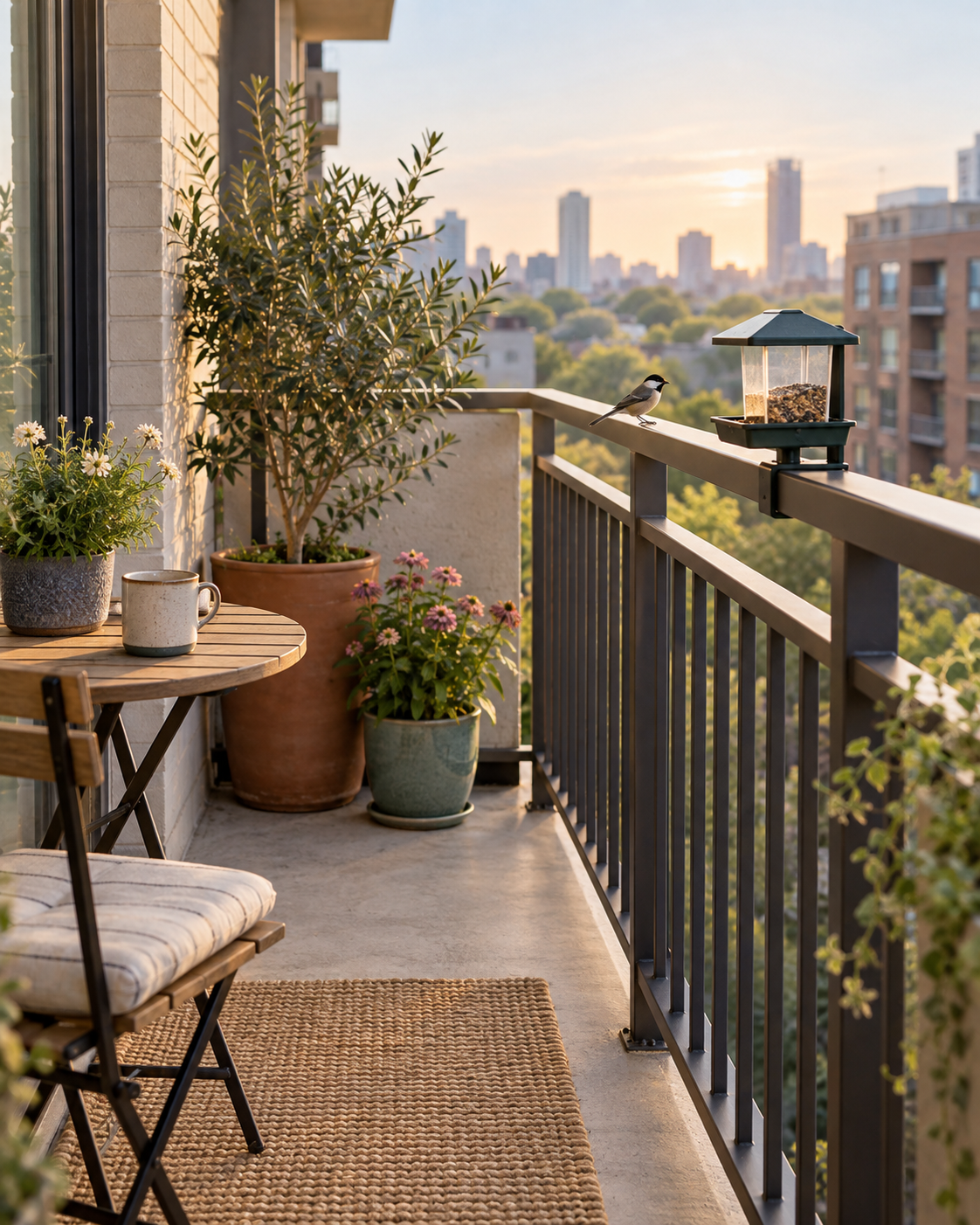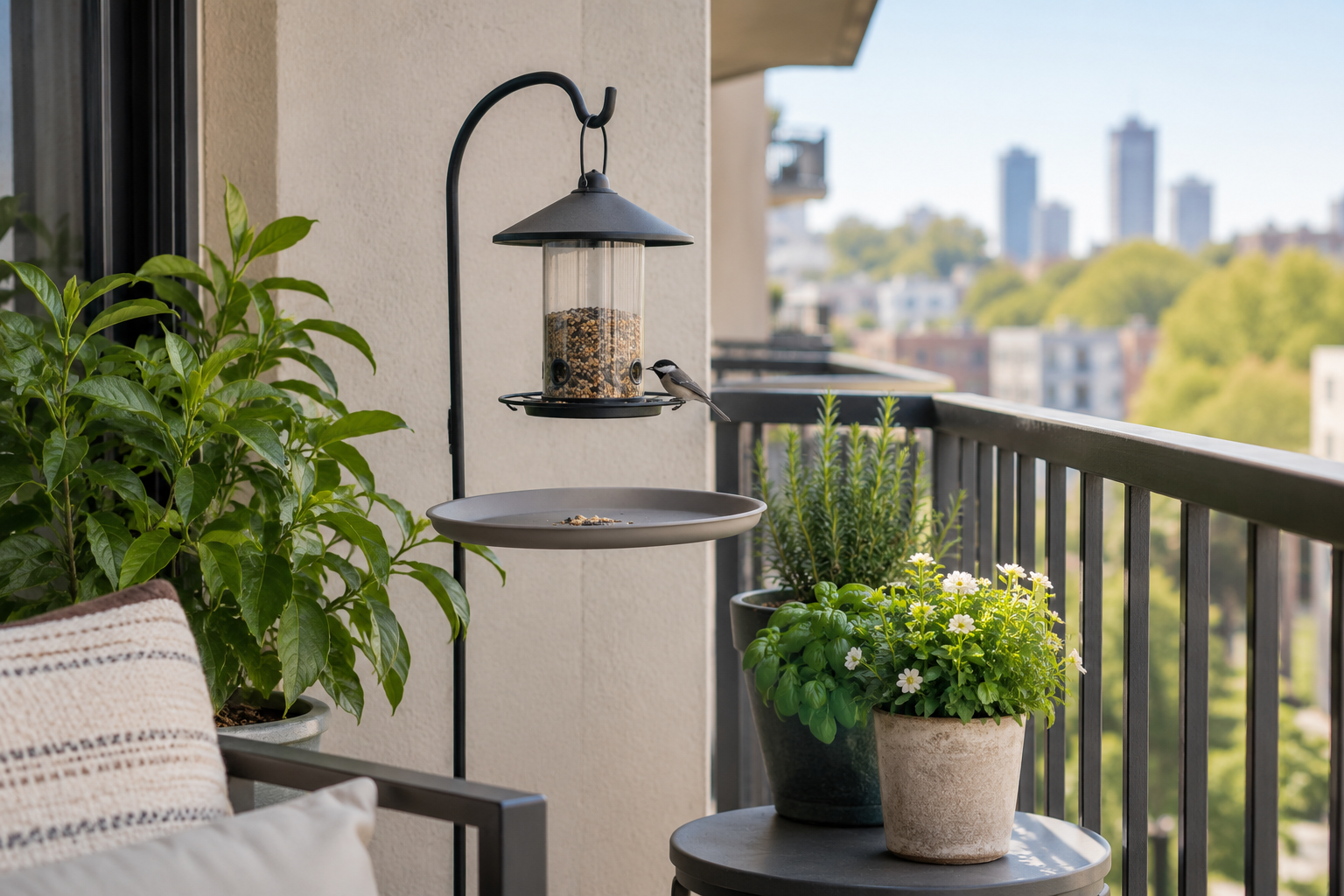
Keeping bird seed from falling onto an apartment balcony is not about finding one perfect product. It is about using a small amount of seed, choosing a feeder you can maintain, and placing it where cleanup is simple.
Start by checking your lease, building rules, and balcony layout. A clean feeding setup is easier to maintain and more considerate of neighbors.
Use less seed at a time
Fill the feeder with only the amount birds can reasonably eat in a day or two. This reduces loose seed, wet seed, and old seed collecting on the balcony.
Choose a feeder that is easy to clean
Refill more often instead of filling the feeder completely. It gives you a better chance to notice when seed is damp, spoiled, or being scattered.
For a balcony, a feeder should be stable, easy to reach, and simple to clean from indoors or from a safe outdoor position. Avoid designs that leave seed exposed to rain or make it difficult to remove old food.
A small feeder is often a better starting point than a large tray. Large open trays can hold more seed, but they can also allow more birds to scatter food and can be harder to keep clean.
Place the feeder away from the balcony edge
Keep the feeder in a location where dropped seed stays inside your own balcony area. Do not place it where seed can blow or fall onto a neighbor’s balcony, walkway, or shared outdoor space.
Make sure you can safely reach the feeder for refilling and cleaning. Never lean over a railing or use a location that makes routine maintenance unsafe.
Consider seed with fewer shells
Birds leave seed shells behind, and those shells can make a balcony look messy quickly. Hulled sunflower seed, often sold as sunflower hearts or chips, can reduce the number of shells left below the feeder.
Use a small amount at first. Any bird food can become a problem if it gets wet, is left too long, or is placed where it cannot be cleaned easily.
Clean up before seed becomes a problem
Check the balcony floor, railing, and feeder regularly. Remove wet seed and old debris promptly. Keep the feeder dry and wash it according to the manufacturer’s instructions before adding fresh seed.
Do not sweep seed over the balcony edge. Collect it and dispose of it properly instead.
When a seed catcher may help
A seed catcher or tray can help contain some falling seed, but it is not a guarantee of a mess-free balcony. Choose one only if it fits securely, does not interfere with safe access, and can be cleaned easily.
Do not use a catcher that creates a place for wet seed or droppings to collect.
Know when to pause feeding
Pause feeding if seed repeatedly gets wet, if you cannot keep the area clean, or if your building rules do not allow bird feeding. A small, manageable setup is better than a larger setup that creates concerns for you or your neighbors.
A simple balcony routine
Use a small amount of seed.
Keep the feeder stable and safely reachable.
Check for loose or wet seed.
Clean the feeder and balcony regularly.
Review building rules before changing the setup.
Final thoughts
The best way to reduce falling bird seed is to make the setup easy to manage. Start small, keep the feeding area dry and clean, and adjust the location or amount of seed before adding more equipment.
If you are choosing a feeder for a window instead of a balcony railing, see our guide to Best Window Bird Feeders for Apartments and Small Spaces.