How to Clean a Bird Feeder on an Apartment Balcony
A clean bird feeder helps protect the birds that visit your balcony and makes the space easier to share with neighbors. The goal is not to create a complicated routine. It is to remove old seed, moisture, hulls, and droppings before they build up.
Choose a feeder that you can reach safely from indoors or from a stable balcony position. Follow the manufacturer’s cleaning instructions for your specific feeder.
Start with a simple cleaning setup
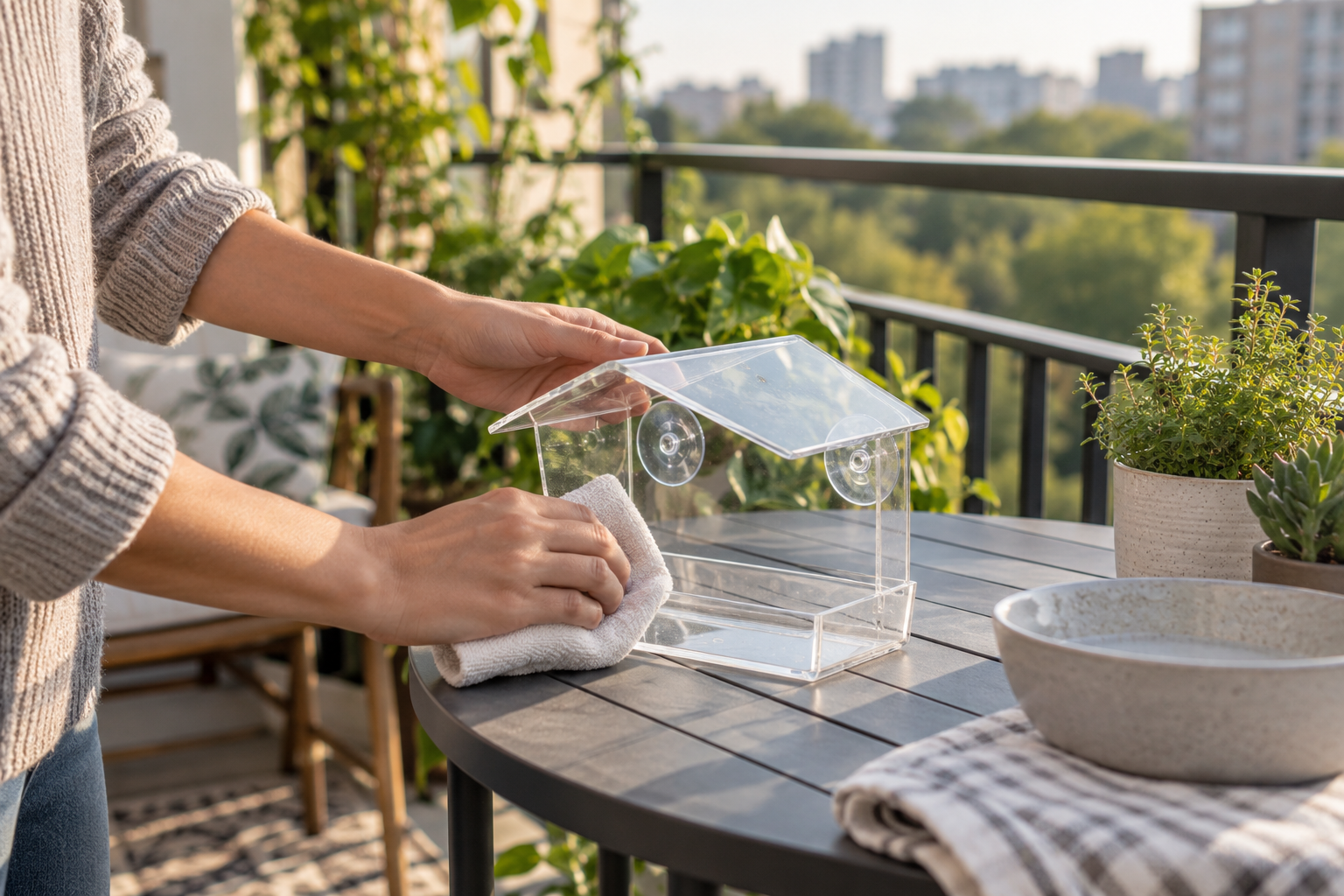
Keep a small brush, a container for old seed, and a cloth or paper towels ready for feeder care. It helps to use cleaning tools that are reserved for the feeder rather than for kitchen dishes.
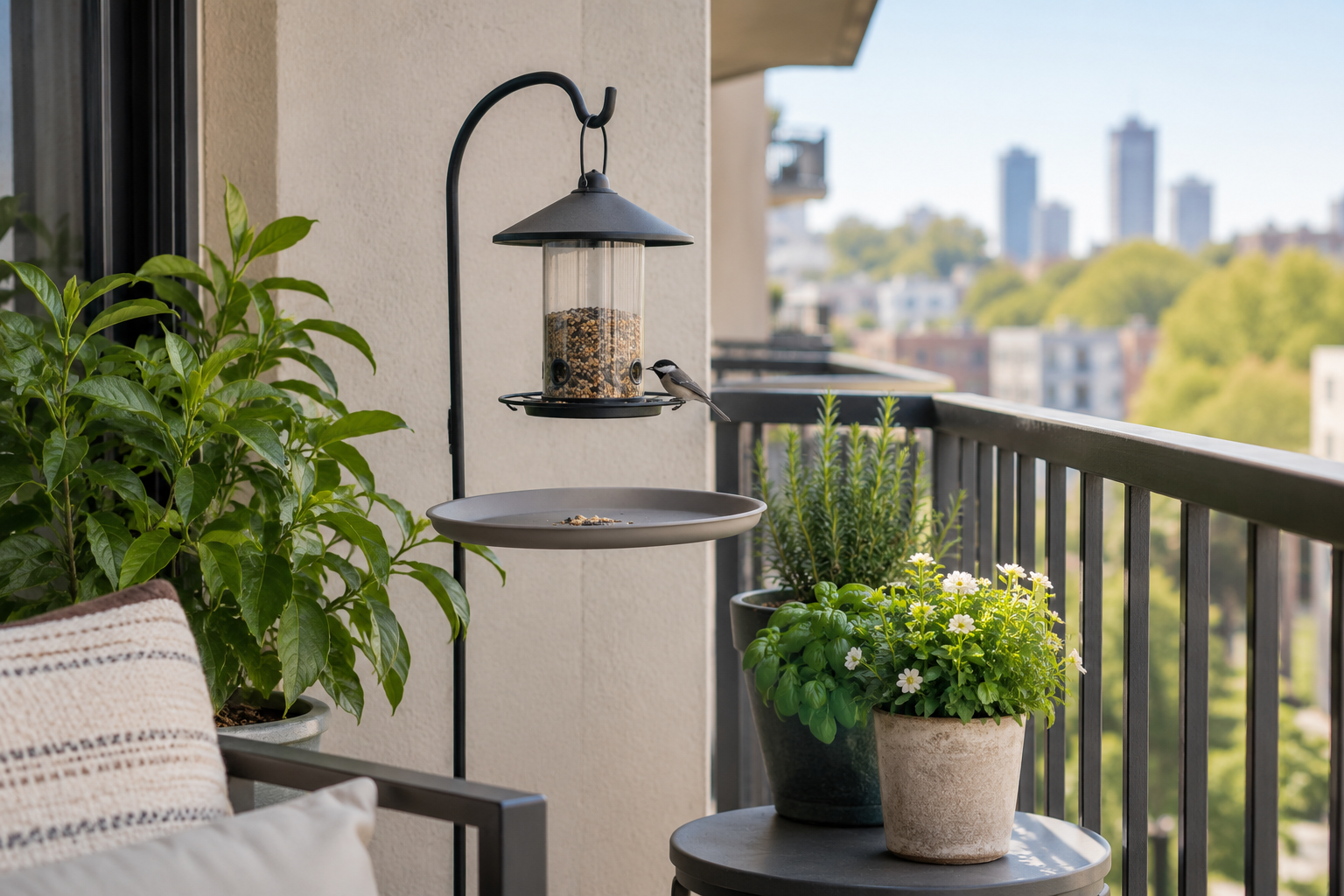
Before you begin, check the balcony floor and the feeder tray for wet seed, clumps, or droppings. Do not shake debris over the balcony edge. Collect it and dispose of it properly instead.
Remove old seed before adding new seed
Empty the feeder before refilling it. Seed that stays at the bottom of a tray or tube can become damp, stale, or moldy even when the top layer looks dry.
Use only the amount birds can reasonably eat in a day or two. Smaller portions are easier to inspect and reduce the amount that needs to be thrown away during cleaning.
Clean the feeder regularly
For a routine clean, remove loose seed and hulls with a brush. Take apart removable trays, perches, and seed compartments when the design allows it.
Wash the feeder according to the manufacturer’s instructions. Cornell Lab of Ornithology recommends cleaning seed feeders about every two weeks, and more often during wet weather, heavy use, or when sick birds have been seen nearby.
Rinse the feeder thoroughly after washing. Any cleaning product left behind can be harmful to birds.
Use a deeper cleaning when needed
A deeper cleaning is useful when seed has become wet, droppings have collected, or the feeder has not been cleaned for several weeks.
Cornell Lab guidance allows a dilute bleach solution of no more than one part bleach to nine parts water for seed feeders. If you use this method, keep the area ventilated, never mix cleaning products, rinse the feeder very thoroughly, and allow it to dry completely before adding seed again.
If the feeder’s manufacturer gives different instructions for its material or finish, follow those instructions.
Let everything dry before refilling
Do not refill a damp feeder. Moisture can spoil seed quickly, especially inside small tubes, corners, and removable trays.
After washing, place the feeder where it can dry fully before putting it back in use. Check drainage holes and mesh sections for blockages so rainwater does not stay trapped.
Clean the balcony area below the feeder
The area under the feeder matters as much as the feeder itself. Hulls, spilled seed, and wet food can collect on a balcony floor or in corners near the railing.
Sweep or pick up loose seed regularly. Wipe small spills before they are stepped on or washed into drains. Keeping the area tidy helps reduce odors and makes the feeding setup more considerate of neighbors.
Check the feeder after rain
Rain can turn a small seed problem into a larger cleanup job. After wet weather, inspect the tray, seed compartment, and balcony floor.
Remove seed that is soaked, clumped, sprouting, or has an unusual smell. Refill only after the feeder is dry. A feeder with drainage and easy tray access makes this routine much simpler.
Know when to pause feeding
If you see several sick or dead birds near the feeder, pause feeding and clean the feeder and surrounding area. Check guidance from local wildlife or public-health authorities before putting it back into use.
A short pause is better than continuing to offer seed in a situation that may spread illness among visiting birds.
A practical balcony routine
A simple routine can keep the job manageable:
- Check the feeder every few days for wet or loose seed.
- Empty old seed before topping up with fresh seed.
- Clean the feeder about every two weeks.
- Sweep or collect debris from the balcony floor regularly.
- Inspect the setup after rain or periods of heavy bird activity.
- Review building rules before changing the feeder location or adding accessories.
Final thoughts
The easiest bird feeder to maintain is one that you can reach, empty, clean, and dry without difficulty. Start with small amounts of seed and a regular routine instead of waiting for a large mess to appear.
To reduce seed falling from a balcony setup, see our guide to How to Keep Bird Seed From Falling on Your Apartment Balcony. If you are choosing a feeder for a nearby window rather than a balcony, see Best Window Bird Feeders for Apartments and Small Spaces.
For detailed feeder-cleaning guidance, visit Cornell Lab of Ornithology at allaboutbirds.org.