A small balcony bird-feeding setup works best when the seed is easy to use, easy to clean up, and unlikely to be left behind in large amounts. The best choice is not always the biggest bag or the most colorful mix. It is the seed that birds will actually eat and that you can keep dry and tidy.
Start with a small amount and watch what happens for a week or two. You will quickly see which seed is eaten, which ends up on the floor, and whether the feeder stays manageable in your space.
Start with seeds birds are likely to eat
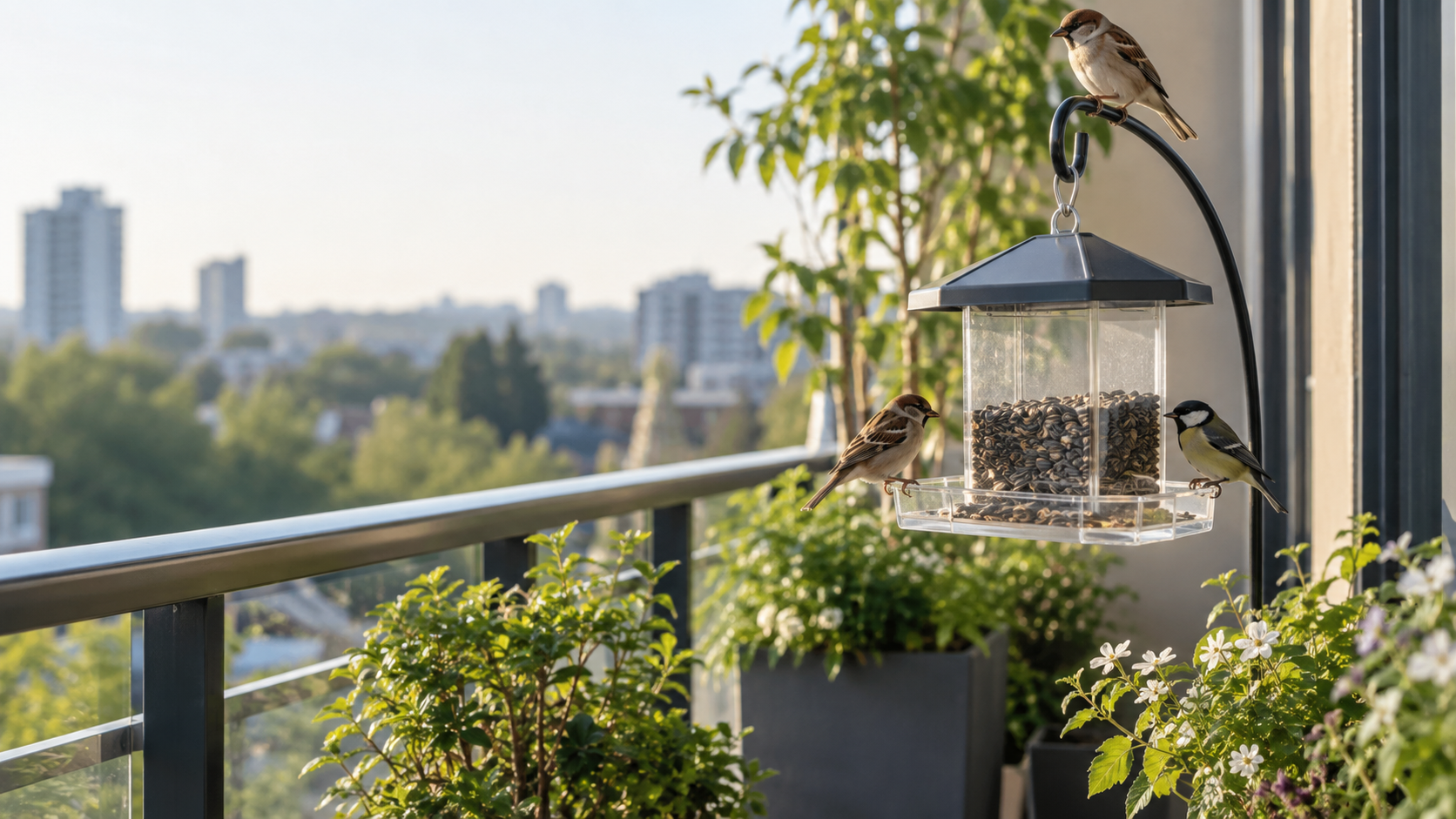
Black oil sunflower seed is a common starting point for many backyard birds. It works in many tray, hopper, and tube feeders, and it gives birds a reliable source of energy.
For a small balcony, avoid filling the feeder too far in advance. Use an amount that visitors can finish in a day or two. This makes it easier to notice wet seed, empty shells, and food that birds are ignoring.
Bird activity changes with the season, weather, and neighborhood. A seed that works well in one apartment building may be less useful in another.
Choose low-mess options for small spaces
Sunflower hearts or chips can be a practical choice when reducing seed shells is important. Because the shells have been removed, there is less hull waste below the feeder.
They also need extra care. Hulled seed can spoil faster when it gets wet, so keep it dry and do not leave large amounts in the feeder after rain.
A small seed tray, catch tray, or ground-safe mat can make cleanup easier. These accessories do not replace routine cleaning, but they can reduce the amount of loose seed that reaches corners of the balcony.
Be careful with large mixed seed bags
A mixed seed bag may look convenient, but some mixes contain ingredients that many birds leave behind. Uneaten pieces can collect on the balcony floor, become damp, and attract unwanted pests.
Check the feeder after a few days. If one type of seed is regularly left behind, it is usually better to buy a simpler mix or a single seed type instead of continuing to add more food that will not be used.
Avoid treating spilled seed as normal. In an apartment setting, even a small amount can become noticeable when it collects near a railing, doorway, or drainage area.
Keep seed dry and store it properly
Moisture is one of the biggest problems in a balcony feeder. Rain, humidity, and damp feeder trays can make seed clump, sprout, or develop an unusual smell.
Store unopened or extra seed in a clean, dry container with a secure lid. Keep it away from direct rain, balcony puddles, and areas that can become hot or humid.
Before refilling, look at the seed in the feeder. Remove anything that is wet, clumped, sprouting, or smells unusual. Do not mix fresh seed on top of old seed without checking the bottom of the tray or tube.
Match the seed to the feeder
The feeder design matters as much as the seed. A feeder with drainage holes, a removable tray, and easy access makes it much easier to manage small portions.
Fine seeds can spill through large openings. Larger seeds may not fit comfortably into every tube feeder. Check the manufacturer’s instructions before changing seed types, especially if the feeder has narrow ports or a small tray.
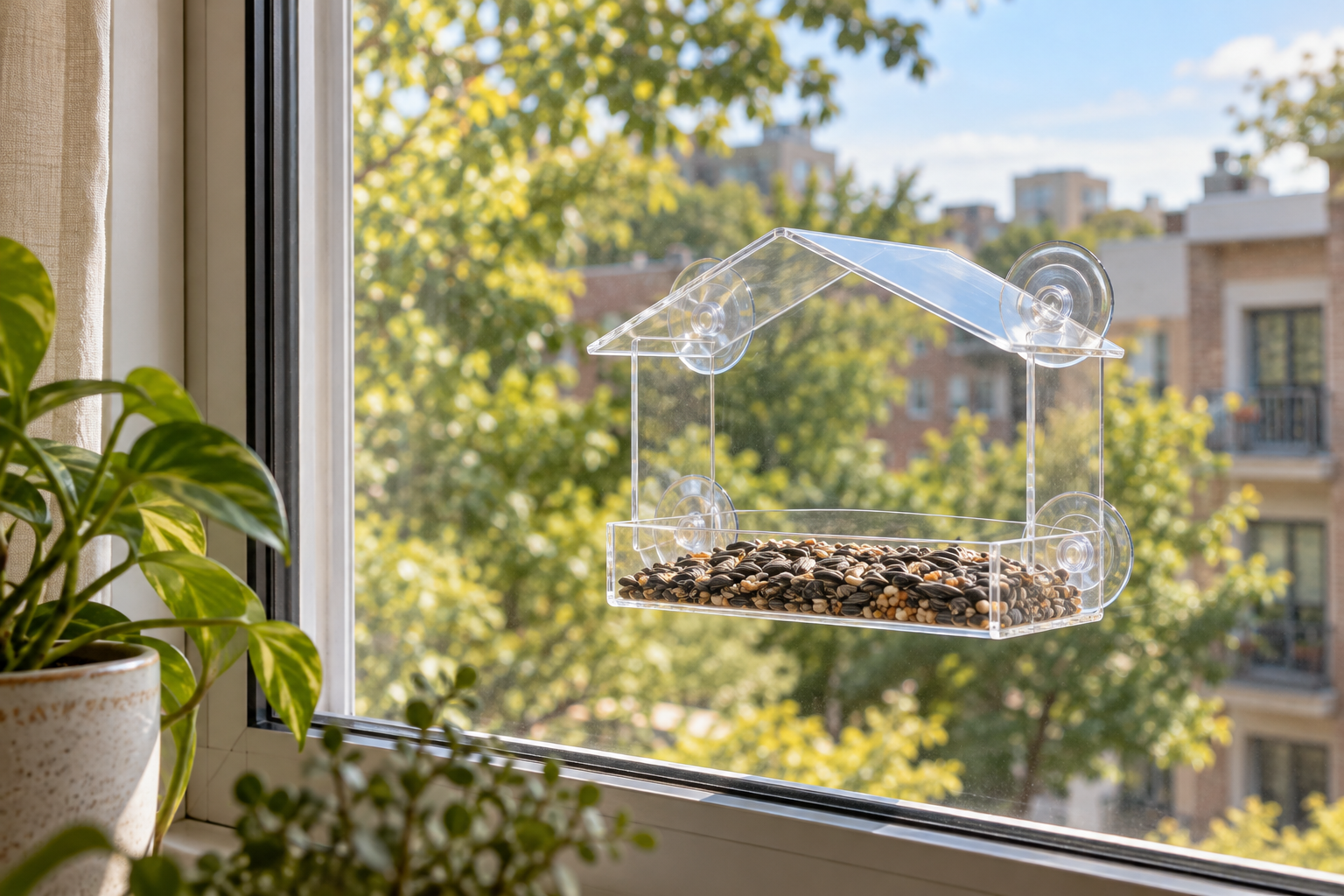
If you are choosing a feeder for a nearby window rather than a balcony, see our guide to Best Window Bird Feeders for Apartments and Small Spaces.
Use a simple refill routine
A practical routine is more useful than trying to keep the feeder full at all times:
- Add only a small amount of seed.
- Check the feeder every few days.
- Remove wet or old seed before topping up.
- Sweep or collect loose seed from the balcony floor.
- Inspect the feeder after rain.
- Adjust the amount if birds are leaving food behind.
To reduce seed falling from a balcony setup, see our guide to How to Keep Bird Seed From Falling on Your Apartment Balcony.
Know when to pause feeding
Pause feeding if seed repeatedly becomes wet, pests appear, or you see several sick or dead birds near the feeder. Clean the feeder and the surrounding area before starting again.
A short pause is better than continuing a setup that is difficult to maintain. In a shared building, a clean and considerate routine is part of responsible bird feeding.
Final thoughts
For most apartment balconies, the best seed is one that birds eat consistently and that does not create more cleanup than you can reasonably manage. Start small, keep the feeder dry, and adjust based on what you observe.