Bird feeding can work well on an apartment balcony, but it needs a setup that is safe, easy to clean, and respectful of the people living nearby. Before buying a feeder or adding seed, take a few minutes to look at the balcony itself, the building rules, and how the setup might affect neighbors.
A small, well-maintained feeder is usually easier to manage than a large one. Start with one simple setup and adjust only after you see how birds, weather, and cleanup needs affect the space.
Start with building rules
Check your lease, condominium rules, or building guidelines before installing a feeder. Some buildings limit items attached to railings, prohibit hanging objects, or have rules about spilled food, pests, and balcony cleanliness.
If the rules are unclear, ask management before making a change. It is much easier to choose a safe feeder than to remove one later because it does not meet the building’s requirements.
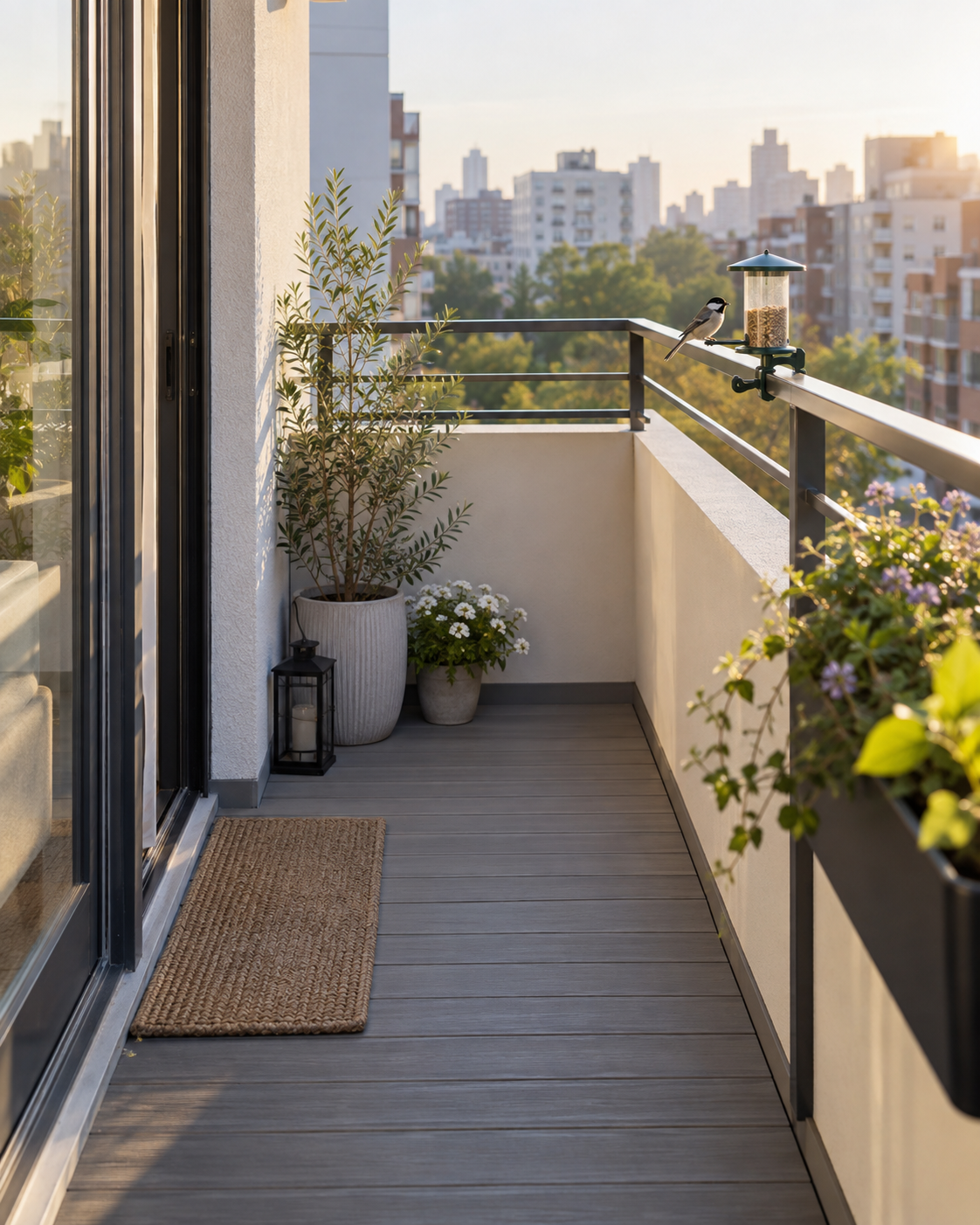
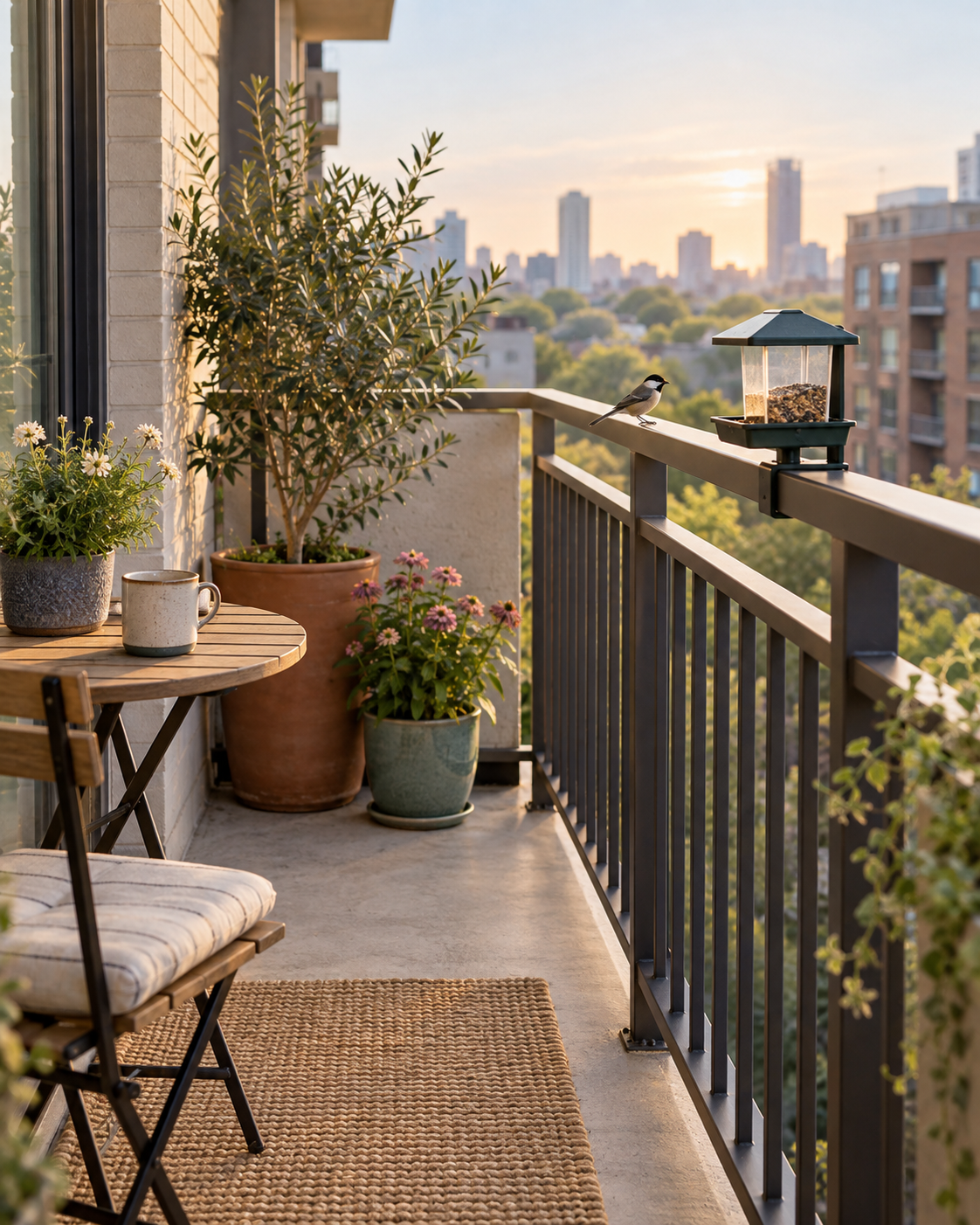
Do not hang a feeder from a railing or exterior fixture unless the building allows it and the feeder can be secured safely.
Choose a safe location
Place the feeder where you can reach it safely from inside the balcony. You should be able to refill, inspect, and clean it without leaning over a railing or using an unstable chair.
Avoid placing the feeder directly above a walkway, another balcony, or a shared entrance. Even a small amount of falling seed or shells can become a concern when it lands outside your own space.
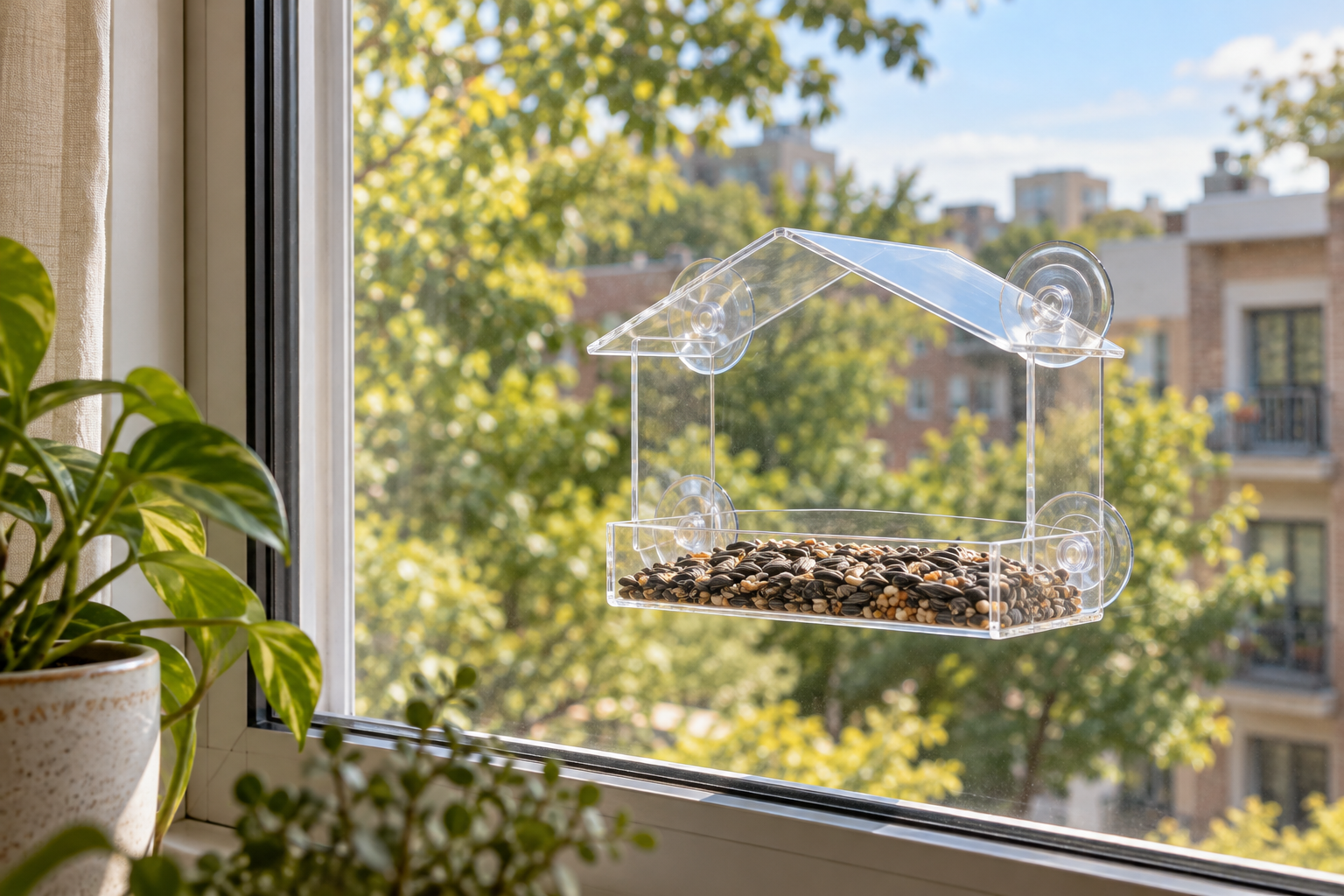
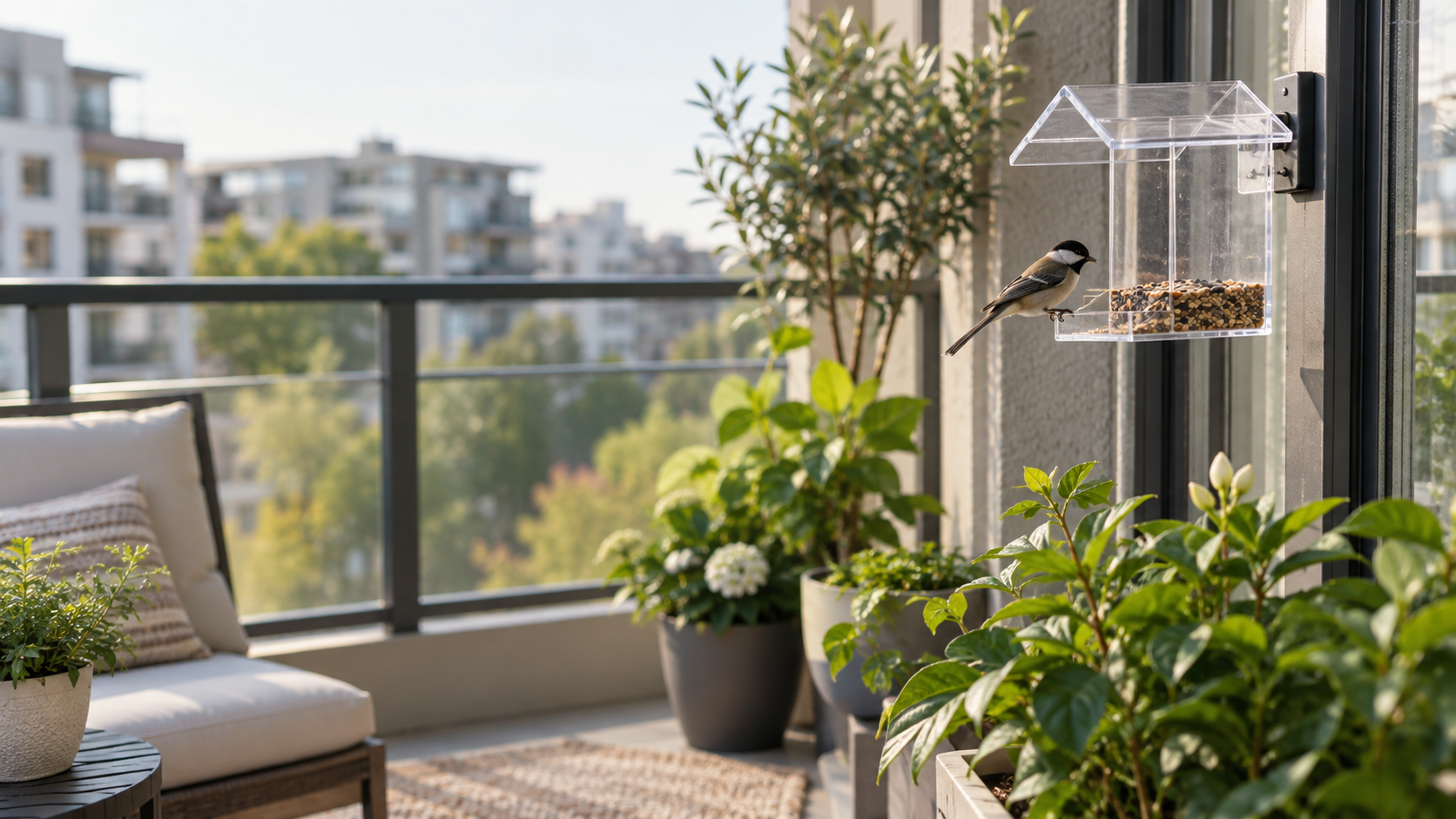
For window setups, make sure the feeder is attached according to the manufacturer’s instructions and that the window can still be used safely.
Keep the setup small at first
A small feeder and a small amount of seed are usually enough to begin. Large feeders can create more spilled seed, more cleaning work, and more attention from birds than you expect.
Fill only what birds can eat in a day or two. This makes it easier to notice old seed, damp areas, or food that is being left behind.
If you are deciding which seed works best in a limited space, see our guide to Best Bird Seed for Apartment Balconies: Low-Mess Choices and What to Avoid.
Reduce seed mess below the feeder
Seed mess is one of the most common concerns on apartment balconies. Hulls, loose seed, and wet food can gather around furniture, drains, or the base of the railing.
A feeder with a removable tray or a small catch area can help. It does not eliminate cleanup, but it can reduce how much falls to the floor.
Sweep or collect debris regularly instead of waiting for a large buildup. Avoid shaking old seed over the balcony edge or washing it into drains.
To reduce seed falling from a balcony setup, see our guide to How to Keep Bird Seed From Falling on Your Apartment Balcony.
Clean the feeder and balcony regularly
A feeder should be easy to reach, empty, clean, and dry. If it is difficult to maintain from the beginning, it may not be a good fit for a balcony.
Check the feeder every few days for wet seed, clumps, droppings, or blocked drainage holes. Clean the feeder and the area below it on a regular schedule, especially after rain or heavy bird activity.
Do not add fresh seed on top of old seed without checking the bottom of the feeder first.
Consider neighbors and shared spaces
Bird feeding should not create odors, pests, noise, or unwanted debris for people around you. A clean and small setup is usually more considerate than a large feeder that is constantly full.
If a neighbor raises a concern, listen carefully and review the setup. Moving the feeder, using less seed, cleaning more often, or pausing feeding may solve the issue without ending the activity completely.
Good balcony bird feeding is not only about attracting birds. It is also about keeping the shared living environment comfortable for everyone.
Know when to pause feeding
Pause feeding if you see repeated problems with wet seed, pests, bird illness, or complaints that cannot be solved through cleanup and adjustment.
A temporary pause gives you time to clean the area, reassess the feeder location, and decide whether a smaller or different setup would work better.
Final thoughts
You can feed birds on an apartment balcony when the setup is allowed, safe, and manageable. Start small, follow building rules, keep the area clean, and pay attention to how the feeder affects the space around it.
A thoughtful routine helps you enjoy birds while protecting the balcony, the building, and your relationship with nearby neighbors.