A small balcony can be a good place to watch birds, but the feeder needs to fit the space and the routine of the person maintaining it. The best choice is usually not the biggest feeder. It is the one you can reach safely, clean regularly, and use without creating unnecessary seed mess.
Before choosing a feeder, look at where it would sit, how it would be attached, and how close it would be to doors, windows, railings, and neighboring balconies.
Start with the balcony itself
Take a moment to measure the usable space. A narrow balcony may not have room for a large hanging feeder, a pole, or a wide tray. It may be better to use one compact feeder in a location that is easy to reach from inside.
Also consider wind and rain. An exposed balcony can make lightweight feeders swing, spill seed, or become wet quickly. A more protected location near a wall or under a covered area may be easier to manage.
Check building rules before attaching anything to a railing or placing a feeder outside. Some buildings have rules about balcony items, spilled food, or objects that could affect neighbors.
Choose a mounting style that fits your space
A feeder should feel stable and simple, not like another object you need to worry about every day.
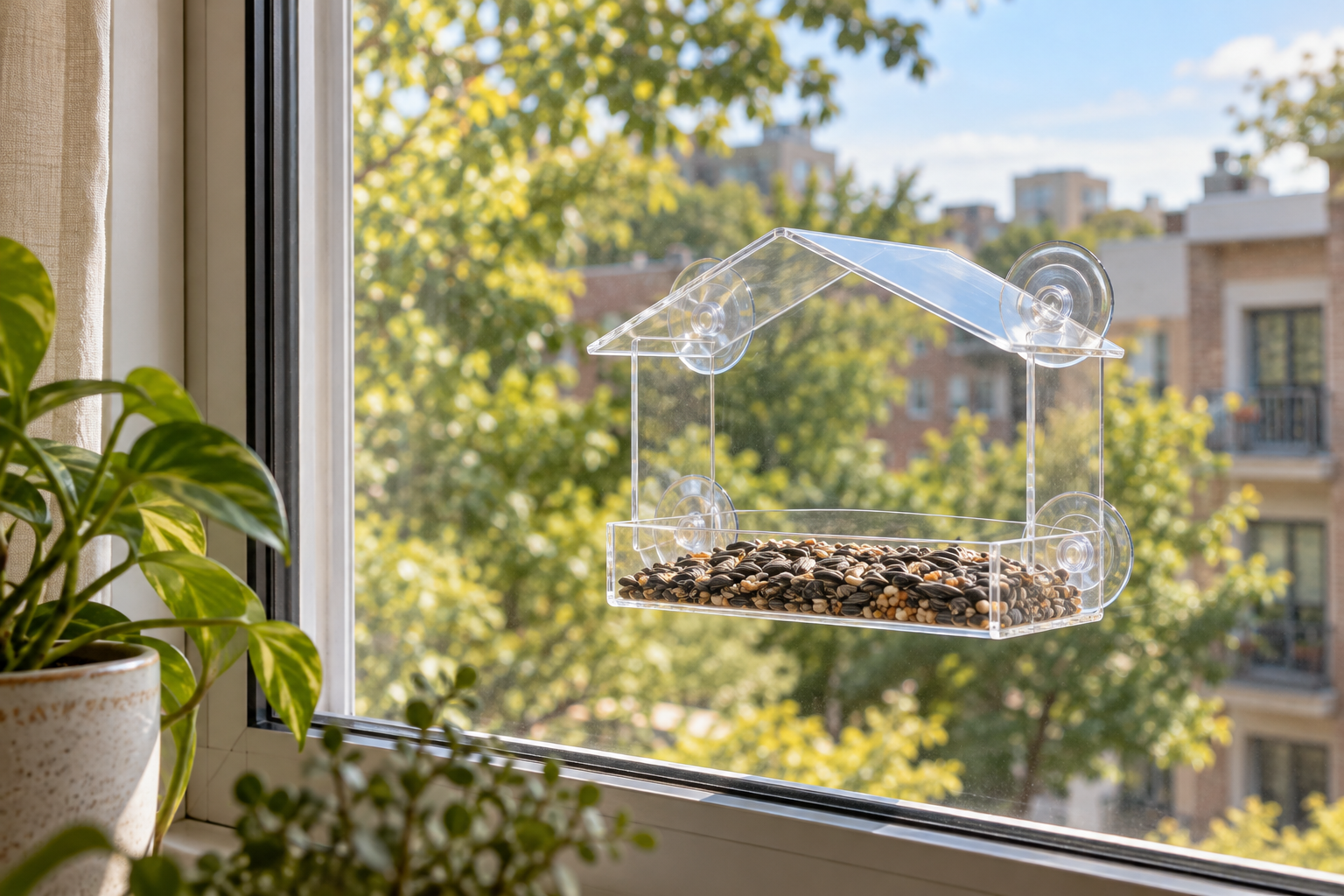
A window feeder can work well when it is attached to clean glass and can be reached safely from indoors. It is especially useful for small balconies where floor or railing space is limited. See our guide to Best Window Bird Feeders for Apartments and Small Spaces if you are considering this type of setup.
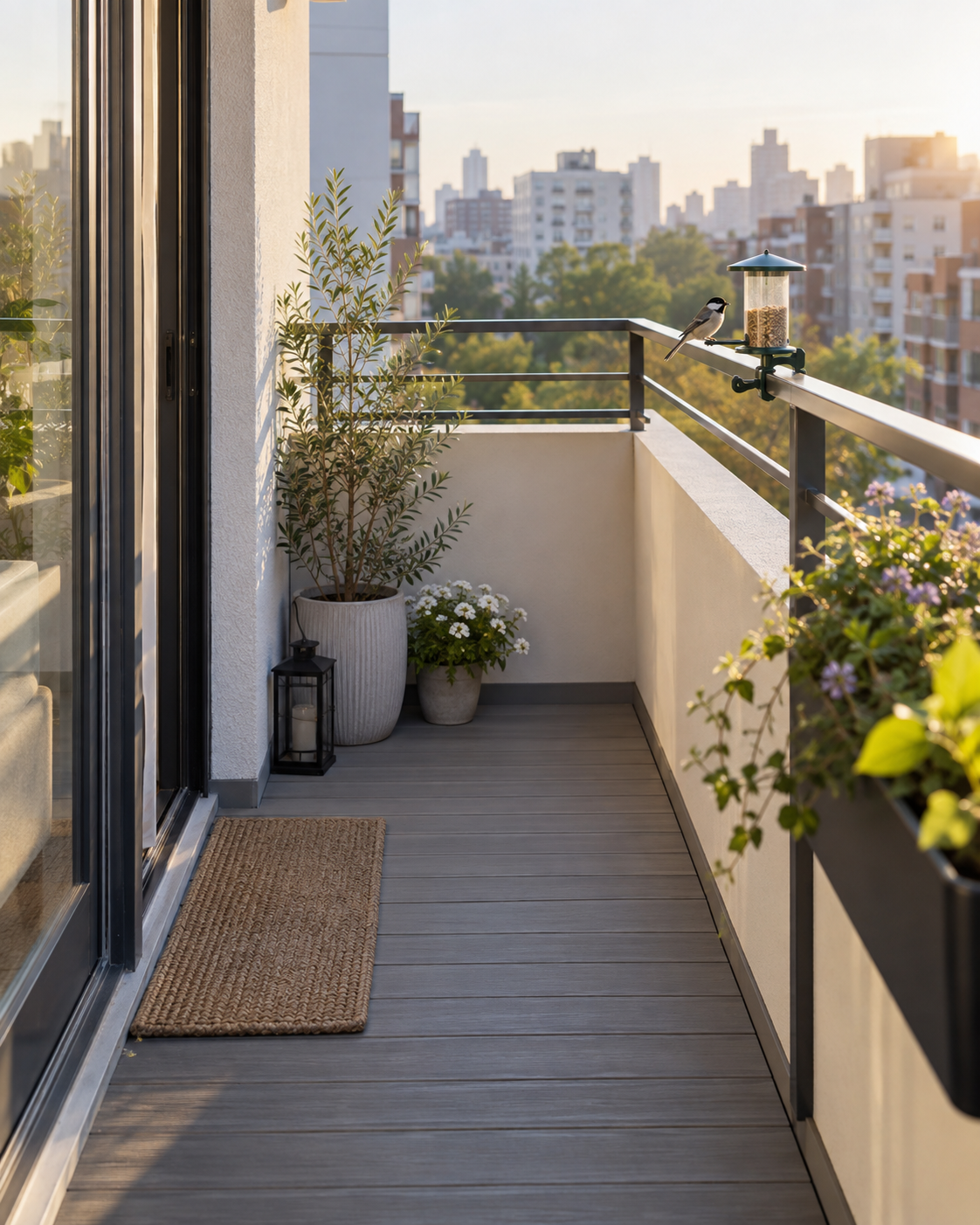
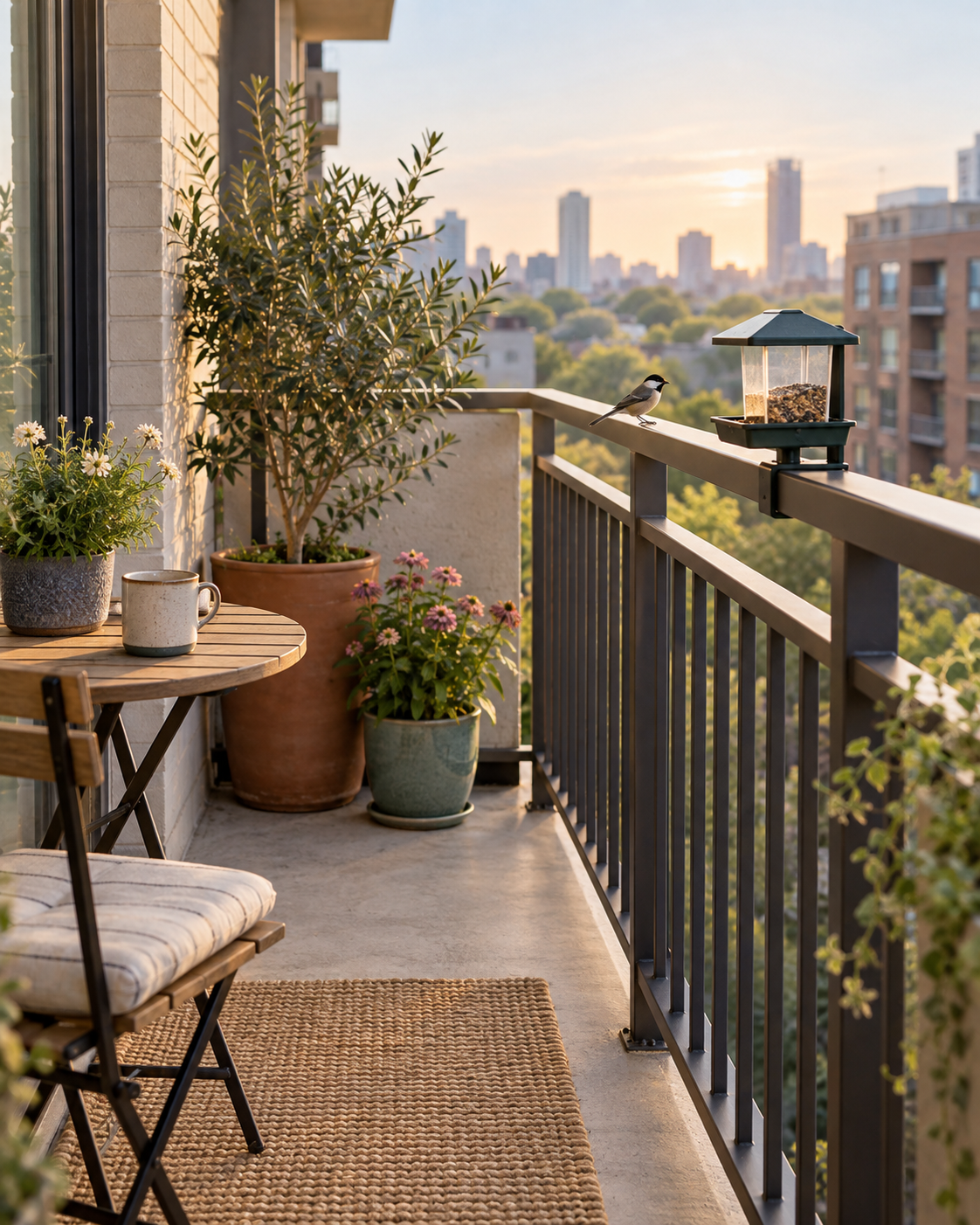
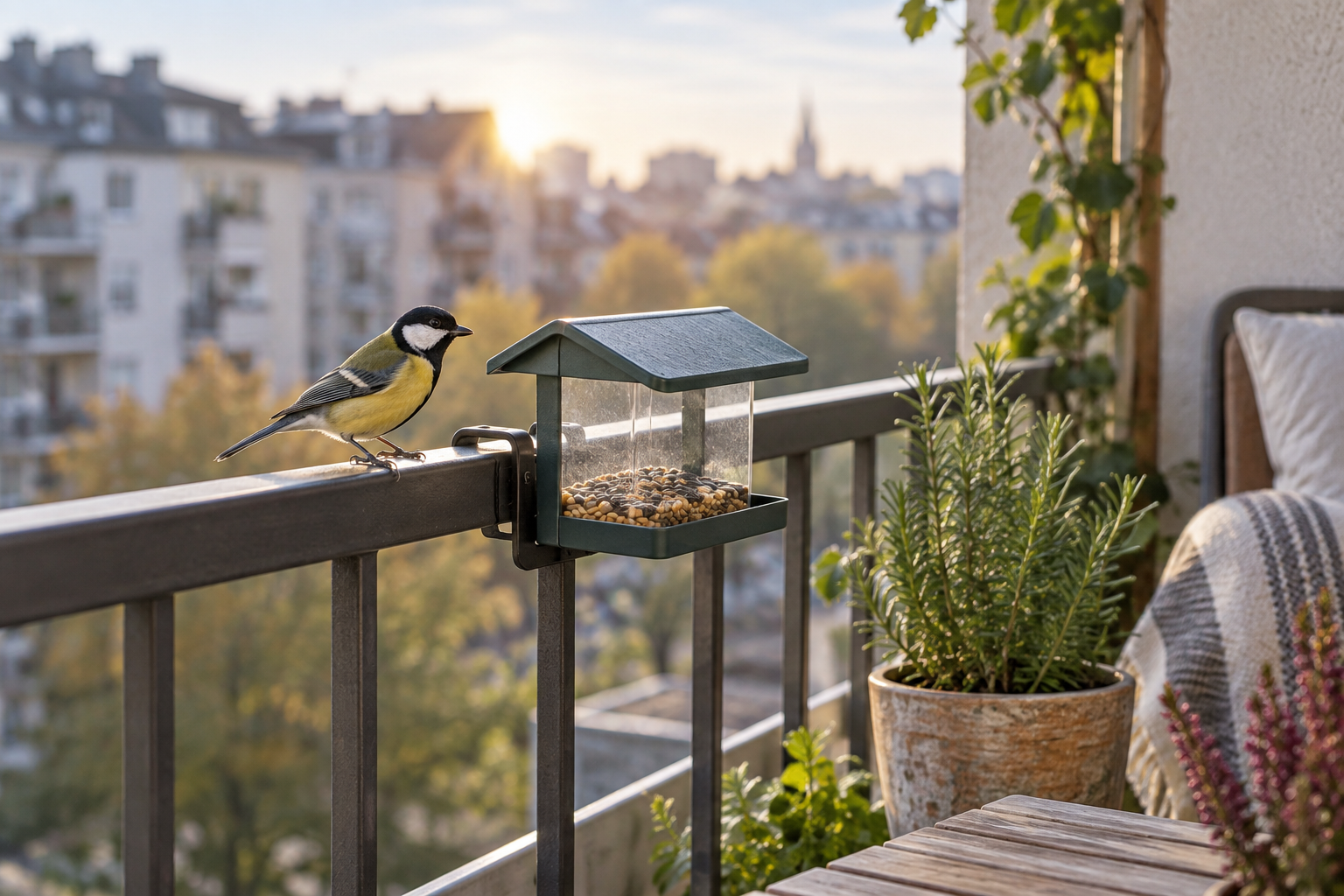
A railing feeder may work when the building allows it and the railing is sturdy. Choose a model that does not block the walkway or hang over an area where falling seed could become a problem.
A tabletop or freestanding feeder may be useful on a wider balcony, but it needs a stable surface and protection from strong wind. Avoid placing it where people need to walk, sit, or open a door.
Pick a size you can maintain
Large feeders can hold more seed, but they also require more cleaning and can create more waste if birds do not eat the seed quickly. For most apartment balconies, a small feeder is easier to monitor.
Start with a feeder that holds only a modest amount of seed. Refill it as needed instead of leaving large amounts outside for long periods. This helps keep seed dry and gives you a chance to notice spills, moisture, or signs that the feeder needs cleaning.
A removable tray or a simple open design can also make maintenance easier. If a feeder is difficult to take apart or reach, it may not be a practical choice for daily apartment living.
Think about seed mess before you buy
The feeder and the seed should work together. Some seed types have more shells and can create more debris below the feeder. A feeder with a tray or a small seed catcher may help, but it will still need regular attention.
Place the feeder where you can see the area below it. That makes it easier to remove fallen seed before it collects on the balcony or reaches a neighboring space.
For more practical ways to reduce spills, see How to Keep Bird Seed From Falling on Your Apartment Balcony.
Make cleaning part of the choice
Choose a feeder that you can clean without difficulty. You should be able to remove old seed, wipe or wash the feeding area, and allow the feeder to dry before filling it again.
A feeder does not need to look complicated to be useful. A basic design with accessible corners and a removable tray is often better than a decorative model that is hard to maintain.
If you are setting up a cleaning routine, read How to Clean a Bird Feeder on an Apartment Balcony.
Keep birds and neighbors in mind
Good placement matters. A feeder should be visible to you, safely reachable, and away from places where birds could collide with glass or where seed could fall onto another balcony.
Keep the feeding area dry and clean. If the balcony is very busy, exposed to frequent rain, or difficult to clean, it may be better to use a smaller feeder or pause feeding until conditions improve.
It is also important to consider building rules and nearby residents. A simple, clean setup is more likely to remain manageable over time. For guidance on these considerations, see Can You Feed Birds on an Apartment Balcony? Rules, Safety, and Neighbor Considerations.
A simple way to choose
For a very small balcony, start with one compact feeder that is easy to reach and clean.
For a balcony with limited floor space, consider a window feeder if the glass is suitable and the setup is secure.
For a balcony that gets windy or wet, choose a stable feeder, use a small amount of seed, and check it often.
For a shared building, prioritize a setup that limits falling seed, stays tidy, and respects building rules.
Final thoughts
The right bird feeder for a small balcony is the one that fits your available space and your ability to maintain it. Start small, keep the feeder clean, and adjust the setup when you see what works in your home.
A practical feeder, a small amount of seed, and a regular routine can make bird watching enjoyable without turning the balcony into a difficult space to manage.