Category: Balcony Bird Feeders

  • Where to Place a Bird Feeder on an Apartment Balcony

    Where to Place a Bird Feeder on an Apartment Balcony

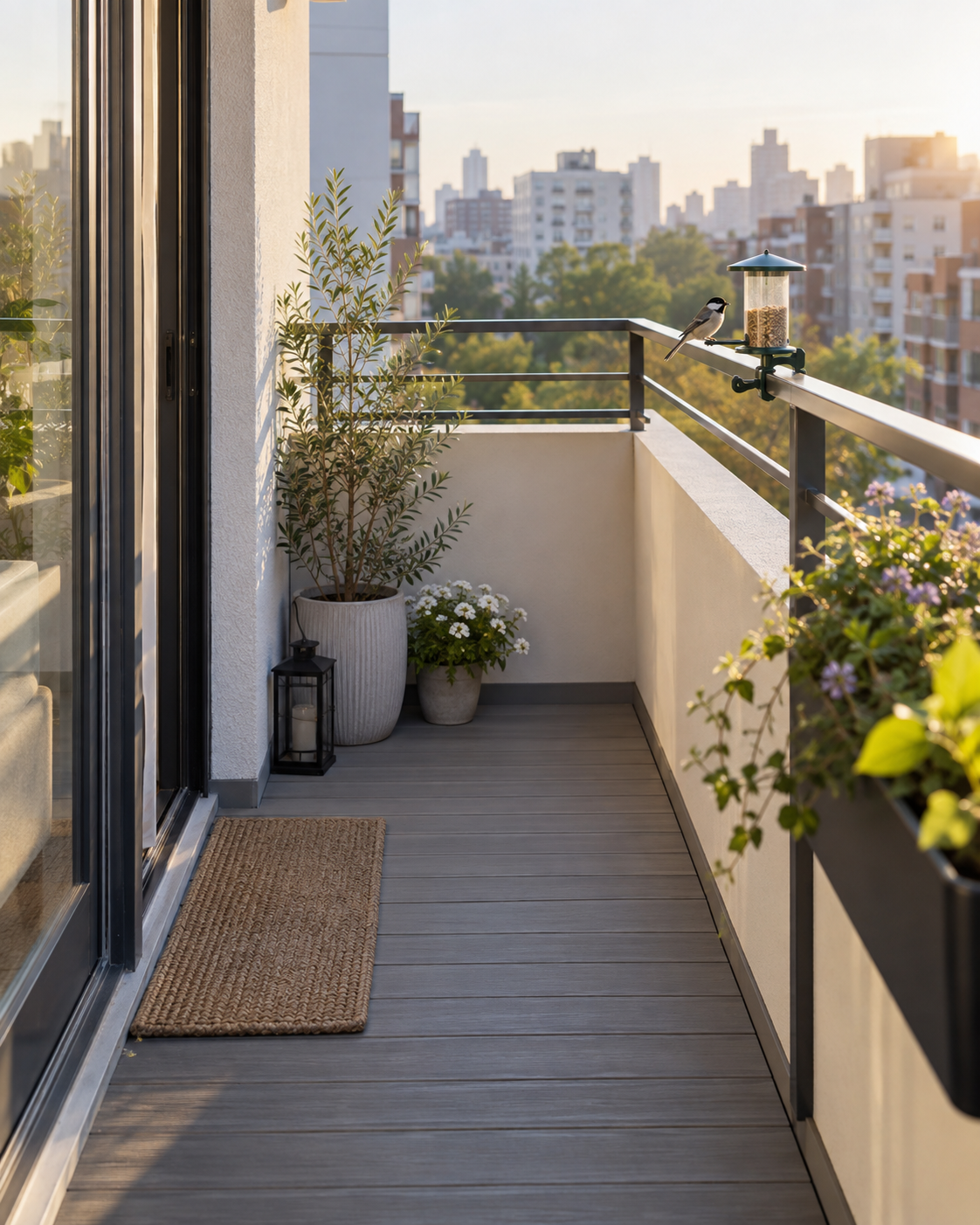
    The location of a bird feeder can make a small balcony easier or harder to manage. A feeder placed in the right spot is easier to refill, easier to clean, and less likely to create seed mess near doors, furniture, or neighboring balconies.

    There is no perfect location for every apartment. The best spot depends on the balcony layout, wind exposure, railing design, and how close you are to other residents. A practical setup starts with safety and simple maintenance.

    Start with a spot you can reach safely

    Choose a location that you can reach comfortably from inside the balcony. You should be able to refill the feeder, remove old seed, and clean the area without leaning over the railing or standing on unstable furniture.

    A feeder that is difficult to reach may seem manageable at first, but regular cleaning becomes harder over time. Keep the setup close enough to access safely while leaving room to walk, sit, and open the balcony door.

    If your balcony is narrow, place the feeder toward one end instead of in the center of the walking path.

    Keep the feeder away from doors and seating areas

    Avoid putting a feeder directly beside a door or above a chair, table, or outdoor rug. Birds can drop seed hulls while feeding, and wind may carry small pieces farther than expected.

    Leaving a little distance between the feeder and your usual seating area makes cleanup easier. It also helps keep food away from places where people set drinks, eat, or move through the balcony.

    A corner near the railing may work well when it does not interfere with the door or create a hazard for anyone using the space.

    Use the railing carefully

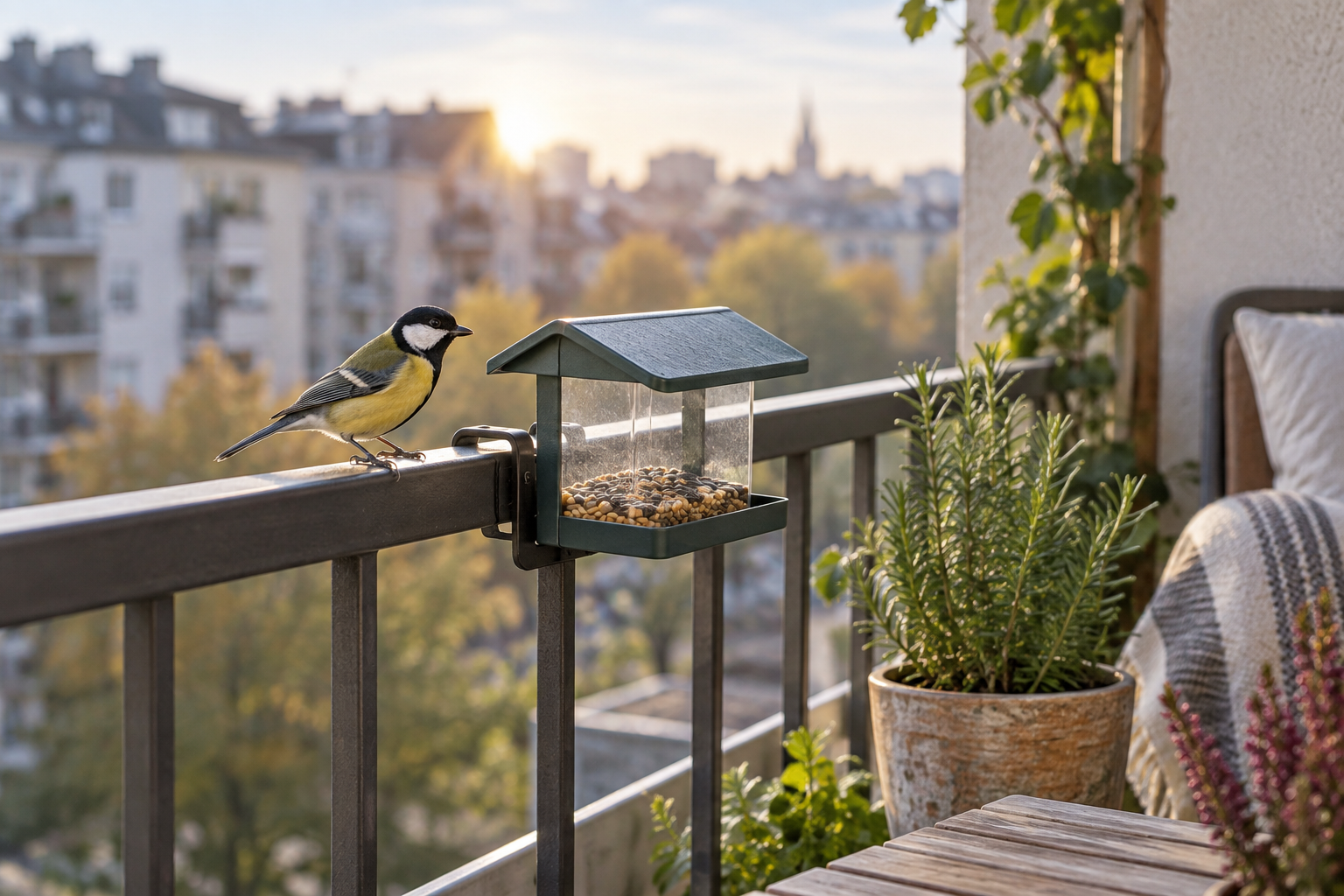
    A railing can be a useful location because it keeps the feeder visible to birds and saves floor space. However, it should be mounted securely and should not extend into a shared walkway or hang where seed can easily fall onto another resident’s balcony.

    Check whether the railing is stable and whether the feeder attachment fits properly. Do not force a mount onto a railing that is too wide, too narrow, or shaped in a way that prevents a secure connection.

    For help choosing a feeder style that fits your available space, see How to Choose a Bird Feeder for a Small Balcony.

    Consider wind before choosing the final location

    Wind can turn a tidy feeder setup into a messy one. An exposed corner may look convenient, but strong wind can move a hanging feeder, blow seed from an open tray, and scatter hulls across the balcony.

    Look for a location with some protection from a wall, side panel, or covered area. The feeder still needs to be visible and accessible, but it does not need to sit in the most exposed part of the railing.

    After placing the feeder, observe it for a few days. If seed keeps blowing into a corner or against the door, move the feeder slightly and reduce the amount of seed you add at one time.

    Keep seed away from neighboring balconies

    Apartment balconies often sit directly above, below, or beside other homes. Think about where loose seed may land before you fill the feeder.

    Avoid placing a feeder above the edge that faces a neighbor’s balcony below. Also avoid locations where wind could push seed into a shared walkway or toward another resident’s window.

    A small feeder with a modest amount of seed is easier to manage than a large feeder that stays full all the time. For practical ways to reduce dropped seed, read How to Keep Bird Seed From Falling on Your Apartment Balcony.

    Place the feeder where you can monitor it

    One of the advantages of feeding birds from a balcony is being able to observe the setup closely. Choose a location you can see from indoors or notice when you step outside.

    Being able to monitor the feeder helps you see when seed becomes wet, when the feeder needs cleaning, or when a location is creating more mess than expected. It also helps you notice whether birds are comfortable using the feeder.

    Do not place the feeder behind large furniture, dense plants, or stored items that make it difficult to check.

    Think carefully about windows

    A feeder near a window can make bird watching enjoyable, but the location should be practical and safe. Keep the feeder secure and make sure it is not placed where birds may fly quickly toward a glass reflection.

    If you are using a feeder designed for a window, follow its mounting instructions and check it regularly. For other feeder styles, a little distance from the glass may work better depending on the balcony layout.

    For options designed specifically for windows and small spaces, see Best Window Bird Feeders for Apartments and Small Spaces.

    Leave room for cleaning

    The space below and around the feeder should be easy to sweep or wipe. Avoid placing it over a crowded group of pots, outdoor cushions, or areas where debris will be difficult to remove.

    A feeder is easier to maintain when you can quickly check the surface beneath it. Keep a small brush or cleaning cloth nearby so you can remove hulls and loose seed before they build up.

    Regular cleaning helps keep the area more comfortable for you, the birds, and your neighbors. For a simple routine, see How to Clean a Bird Feeder on an Apartment Balcony.

    Check building rules before installing anything

    Before attaching a feeder to a railing or hanging one from a ceiling support, check your building rules. Some apartments have specific restrictions about balcony items, feeding wildlife, or objects attached to railings.

    It is also helpful to consider how the feeder may affect the people who live nearby. A quiet, tidy setup is usually easier to maintain than one that creates frequent seed spills or attracts too much activity in a shared area.

    For more guidance, read Can You Feed Birds on an Apartment Balcony? Rules, Safety, and Neighbor Considerations.

    Final thoughts

    The best place for a bird feeder is one that is safe to reach, protected from excessive wind, and easy to keep clean. It should fit your balcony without blocking doors or creating extra work for you or your neighbors.

    Start with one small feeder in a manageable location. Observe how it performs, then make small changes based on seed mess, weather, and the way birds use the space.
  • Bird Feeder Tray vs. Hanging Feeder for a Small Balcony

    Bird Feeder Tray vs. Hanging Feeder for a Small Balcony

    Choosing a bird feeder for a small balcony is not only about the birds you hope to attract. The feeder also needs to fit your available space, be easy to refill and clean, and avoid creating unnecessary seed mess for you or nearby neighbors.

    Two common options are tray feeders and hanging feeders. Both can work in an apartment setting, but they have different strengths. The better choice depends on your railing, the amount of shelter from wind and rain, and how much daily maintenance you can manage.

    Before choosing a specific style, it helps to understand what each feeder does well and where it may create challenges.

    What is a tray feeder?

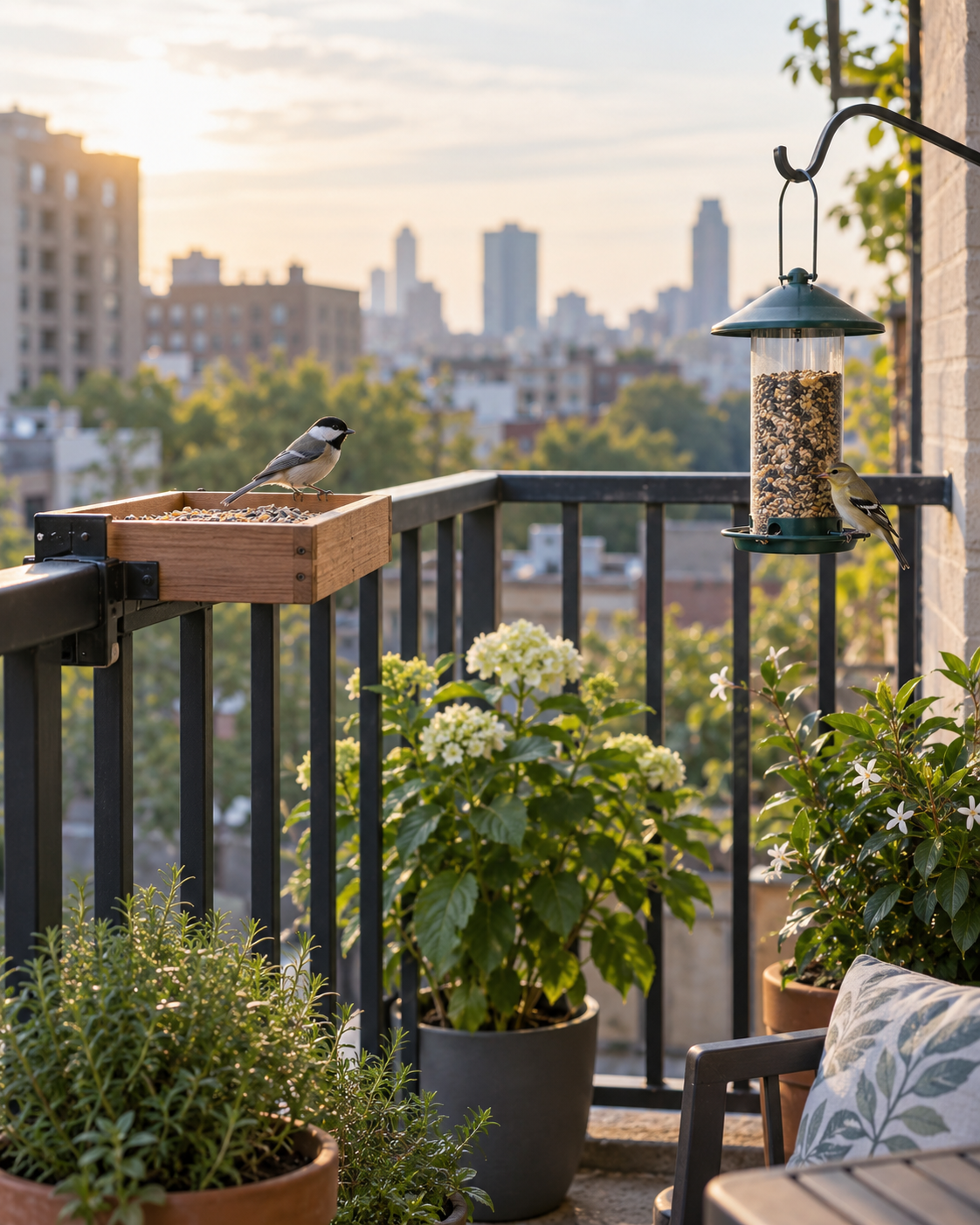
    A tray feeder is a flat, open platform that holds seed. It may sit on a table, attach to a railing, or hang from a support. Because the feeding surface is open, birds can see the seed easily and land without needing to balance on a narrow perch.

    This style can be a welcoming option for different small birds. It also gives you a clear view of the seed level, so you can notice quickly when food is wet, empty, or scattered.

    However, an open tray offers little protection from rain. It can also allow seed hulls and loose seed to blow away more easily if the balcony is exposed to wind.

    What is a hanging feeder?

    A hanging feeder is suspended from a hook, pole, ceiling support, or another stable attachment point. Many have a tube, hopper, or covered feeding area with small ports and perches.

    A hanging feeder can be useful when your balcony has limited floor space. Keeping the feeder off the ground may make the area feel less crowded and can help place the feeding activity away from doors, chairs, or a narrow walking path.

    Some hanging feeders also provide better shelter for seed than an open tray. Still, they need a secure location. A feeder that swings constantly in strong wind may spill seed, become difficult for birds to use, or strike a railing or wall.

    Choose based on your balcony layout

    The best choice starts with the space you actually have.

    A tray feeder may work well if you have a stable railing, a sheltered table, or a protected corner where seed will not blow into a neighboring balcony. It can be simple to reach and easy to observe, which is helpful for a beginner.

    A hanging feeder may be a better fit when floor and table space are limited. It can keep the feeding area compact, especially if you have a safe mounting point and enough distance from windows, doors, and shared walkways.

    For a broader look at size, mounting, and placement, see How to Choose a Bird Feeder for a Small Balcony.

    Seed mess: which option is easier to manage?

    Neither feeder style is completely mess-free. Birds drop hulls, kick seed aside, and sometimes choose only the pieces they prefer. The goal is not perfection. It is to choose a setup you can maintain consistently.

    An open tray can make it easier for birds to scatter seed. If you use one, start with a small amount of seed and remove old seed before it becomes damp or clumped. A tray with raised edges may help contain some of the seed, but it will not stop all spilling.

    A hanging feeder can reduce mess when it has a design that limits how much seed is available at one time. But seed may still fall beneath it, especially when birds land, take off, or shake loose hulls.

    Use a seed type that creates less waste for your situation, and avoid filling any feeder more than birds can reasonably eat before the seed becomes wet or stale. For more practical seed guidance, see Best Bird Seed for Apartment Balconies: Low-Mess Choices and What to Avoid.

    Consider wind and weather

    Wind is one of the biggest differences between these two styles.

    A tray feeder placed on a sheltered surface may remain stable. On an exposed balcony, though, wind can quickly blow seed out of an open tray. Rain can also make the seed wet, which means you may need to empty and clean it more often.

    A hanging feeder may swing in strong wind. If it moves too much, birds may avoid it and seed can spill. Choose a protected spot whenever possible, such as close to a wall but not directly against a window. Make sure it is still easy for you to reach from indoors.

    If your balcony receives frequent wind or rain, begin with a small feeder and observe it for a few days before adding more seed.

    Cleaning and daily care

    A feeder should be easy for you to clean safely. This matters more than choosing a feeder that looks attractive but is difficult to reach or take apart.

    Tray feeders are usually straightforward to inspect because the feeding area is open. The tradeoff is that they can collect wet seed, hulls, and debris quickly.

    Hanging feeders may keep seed more protected, but some models have narrow sections that require more care during cleaning. Choose one you can remove, empty, and dry without needing to lean over a railing or use an unsafe step.

    Whichever style you select, remove old seed, keep the feeding surface dry, and clean the feeder regularly. See How to Clean a Bird Feeder on an Apartment Balcony for a simple apartment-friendly cleaning routine.

    Think about neighbors and building rules

    A small balcony is often part of a shared living environment. Before adding a feeder, check your building rules and think about where seed, hulls, or visiting birds may affect other residents.

    Keep the feeder away from shared walkways and avoid placing it where dropped seed could land on a neighbor’s balcony below. A smaller, carefully managed setup is usually better than a large feeder that creates more activity and more cleanup.

    If you are unsure whether bird feeding is allowed where you live, read Can You Feed Birds on an Apartment Balcony? Rules, Safety, and Neighbor Considerations.

    Which feeder is better for a beginner?

    For a protected balcony with a stable surface, a small tray feeder can be a simple starting point. It is easy to see, refill, and monitor.

    For a balcony with very little usable surface space, a secure hanging feeder may be more practical. It can keep the setup compact, provided that it does not swing excessively and can be reached safely for cleaning.

    There is no single right answer for every apartment. Start with the feeder that fits your space and routine best. Use a modest amount of seed, watch how the area stays clean, and make changes before expanding the setup.

    Final thoughts

    A tray feeder can offer easy access and a clear view of visiting birds. A hanging feeder can save space and may protect seed more effectively. The best option is the one you can place securely, keep clean, and manage without creating problems for neighbors.

    Start small, observe what happens on your balcony, and let the practical details guide your next step.

  • How to Choose a Bird Feeder for a Small Balcony

    How to Choose a Bird Feeder for a Small Balcony

    A small balcony can be a good place to watch birds, but the feeder needs to fit the space and the routine of the person maintaining it. The best choice is usually not the biggest feeder. It is the one you can reach safely, clean regularly, and use without creating unnecessary seed mess.

    Before choosing a feeder, look at where it would sit, how it would be attached, and how close it would be to doors, windows, railings, and neighboring balconies.

    Start with the balcony itself

    Take a moment to measure the usable space. A narrow balcony may not have room for a large hanging feeder, a pole, or a wide tray. It may be better to use one compact feeder in a location that is easy to reach from inside.

    Also consider wind and rain. An exposed balcony can make lightweight feeders swing, spill seed, or become wet quickly. A more protected location near a wall or under a covered area may be easier to manage.

    Check building rules before attaching anything to a railing or placing a feeder outside. Some buildings have rules about balcony items, spilled food, or objects that could affect neighbors.

    Choose a mounting style that fits your space

    A feeder should feel stable and simple, not like another object you need to worry about every day.

    A window feeder can work well when it is attached to clean glass and can be reached safely from indoors. It is especially useful for small balconies where floor or railing space is limited. See our guide to Best Window Bird Feeders for Apartments and Small Spaces if you are considering this type of setup.

    A railing feeder may work when the building allows it and the railing is sturdy. Choose a model that does not block the walkway or hang over an area where falling seed could become a problem.

    A tabletop or freestanding feeder may be useful on a wider balcony, but it needs a stable surface and protection from strong wind. Avoid placing it where people need to walk, sit, or open a door.

    Pick a size you can maintain

    Large feeders can hold more seed, but they also require more cleaning and can create more waste if birds do not eat the seed quickly. For most apartment balconies, a small feeder is easier to monitor.

    Start with a feeder that holds only a modest amount of seed. Refill it as needed instead of leaving large amounts outside for long periods. This helps keep seed dry and gives you a chance to notice spills, moisture, or signs that the feeder needs cleaning.

    A removable tray or a simple open design can also make maintenance easier. If a feeder is difficult to take apart or reach, it may not be a practical choice for daily apartment living.

    Think about seed mess before you buy

    The feeder and the seed should work together. Some seed types have more shells and can create more debris below the feeder. A feeder with a tray or a small seed catcher may help, but it will still need regular attention.

    Place the feeder where you can see the area below it. That makes it easier to remove fallen seed before it collects on the balcony or reaches a neighboring space.

    For more practical ways to reduce spills, see How to Keep Bird Seed From Falling on Your Apartment Balcony.

    Make cleaning part of the choice

    Choose a feeder that you can clean without difficulty. You should be able to remove old seed, wipe or wash the feeding area, and allow the feeder to dry before filling it again.

    A feeder does not need to look complicated to be useful. A basic design with accessible corners and a removable tray is often better than a decorative model that is hard to maintain.

    If you are setting up a cleaning routine, read How to Clean a Bird Feeder on an Apartment Balcony.

    Keep birds and neighbors in mind

    Good placement matters. A feeder should be visible to you, safely reachable, and away from places where birds could collide with glass or where seed could fall onto another balcony.

    Keep the feeding area dry and clean. If the balcony is very busy, exposed to frequent rain, or difficult to clean, it may be better to use a smaller feeder or pause feeding until conditions improve.

    It is also important to consider building rules and nearby residents. A simple, clean setup is more likely to remain manageable over time. For guidance on these considerations, see Can You Feed Birds on an Apartment Balcony? Rules, Safety, and Neighbor Considerations.

    A simple way to choose

    For a very small balcony, start with one compact feeder that is easy to reach and clean.

    For a balcony with limited floor space, consider a window feeder if the glass is suitable and the setup is secure.

    For a balcony that gets windy or wet, choose a stable feeder, use a small amount of seed, and check it often.

    For a shared building, prioritize a setup that limits falling seed, stays tidy, and respects building rules.

    Final thoughts

    The right bird feeder for a small balcony is the one that fits your available space and your ability to maintain it. Start small, keep the feeder clean, and adjust the setup when you see what works in your home.

    A practical feeder, a small amount of seed, and a regular routine can make bird watching enjoyable without turning the balcony into a difficult space to manage.