Watching small birds from an apartment balcony can be enjoyable, even when outdoor space is limited. The goal is not to create a large feeding station. A simple, clean setup can make the balcony more inviting while remaining easy to manage.
Start with one feeder, a small amount of appropriate seed, and a routine you can maintain. Birds may take time to notice a new feeding area, so consistency matters more than adding too many items at once.
Start with a simple feeder setup
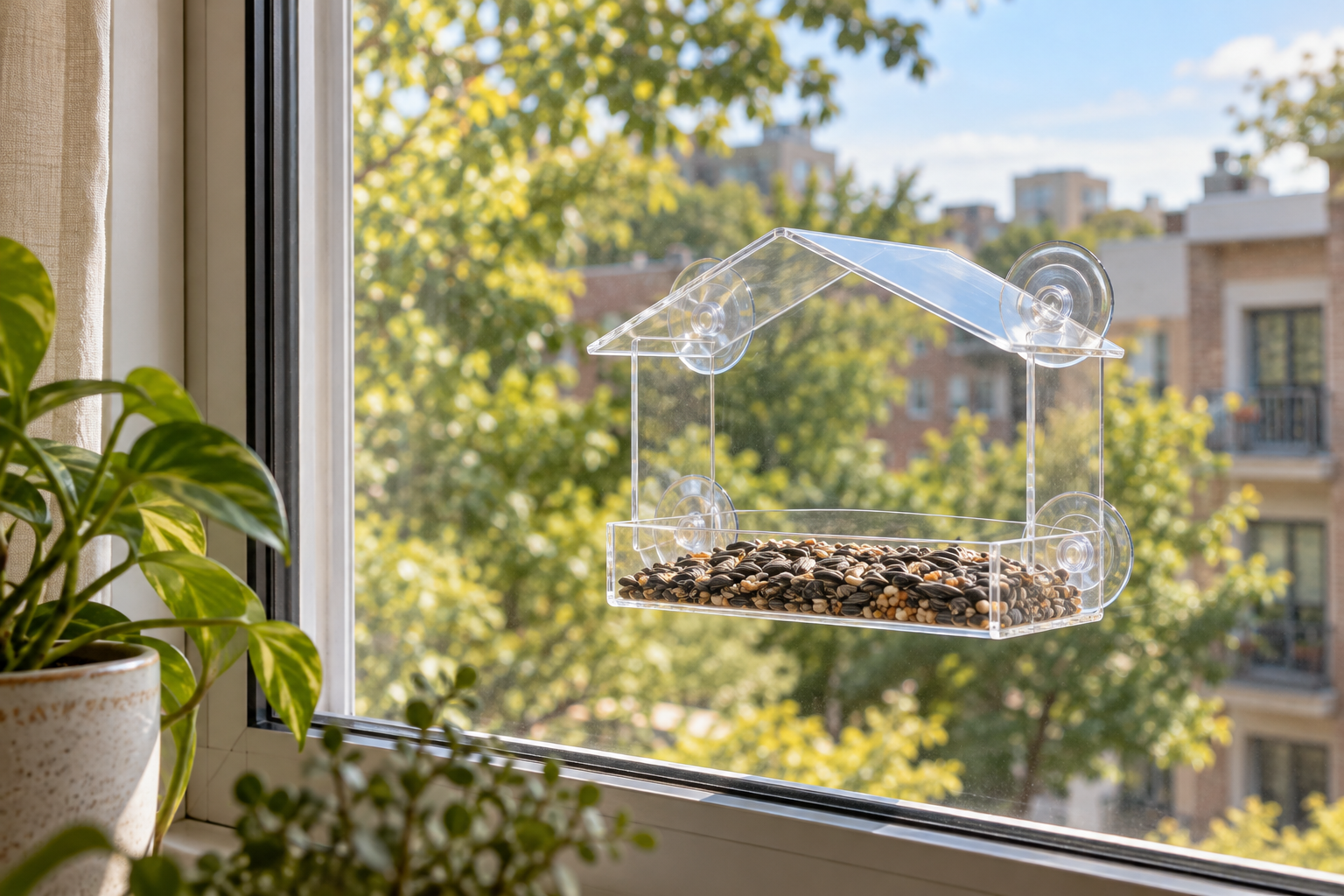
A small balcony works best with a feeder that fits the available space and does not block doors, seating, or the walking area. Choose a location you can reach safely for refilling and cleaning.
A compact feeder is often easier to manage than a large feeder with too much seed. It also helps you notice spills, wet seed, or other changes before they become a problem.
If you are still deciding which feeder style fits your space, see How to Choose a Bird Feeder for a Small Balcony.
Use seed that keeps the balcony manageable
The seed you use affects both the birds you attract and the amount of debris that collects below the feeder. Seed mixes with many lightweight shells can create more mess, especially on a small or shared balcony.
Start with a modest amount of seed and refill it regularly. This gives you more control than filling the feeder completely and leaving it outside for long periods.
For practical guidance on low-mess choices, read Best Bird Seed for Apartment Balconies: Low-Mess Choices and What to Avoid.
Keep the feeder visible and easy to reach
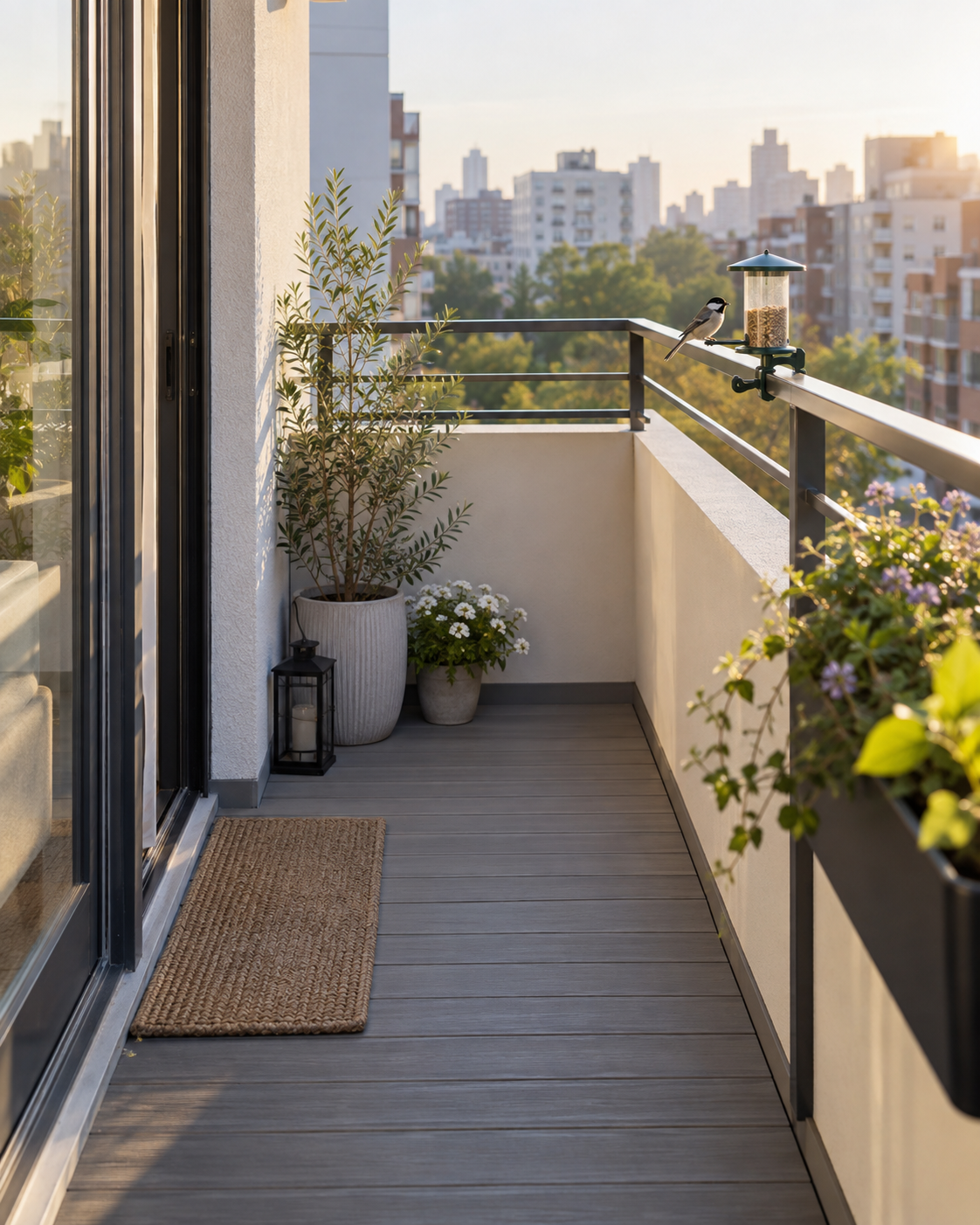
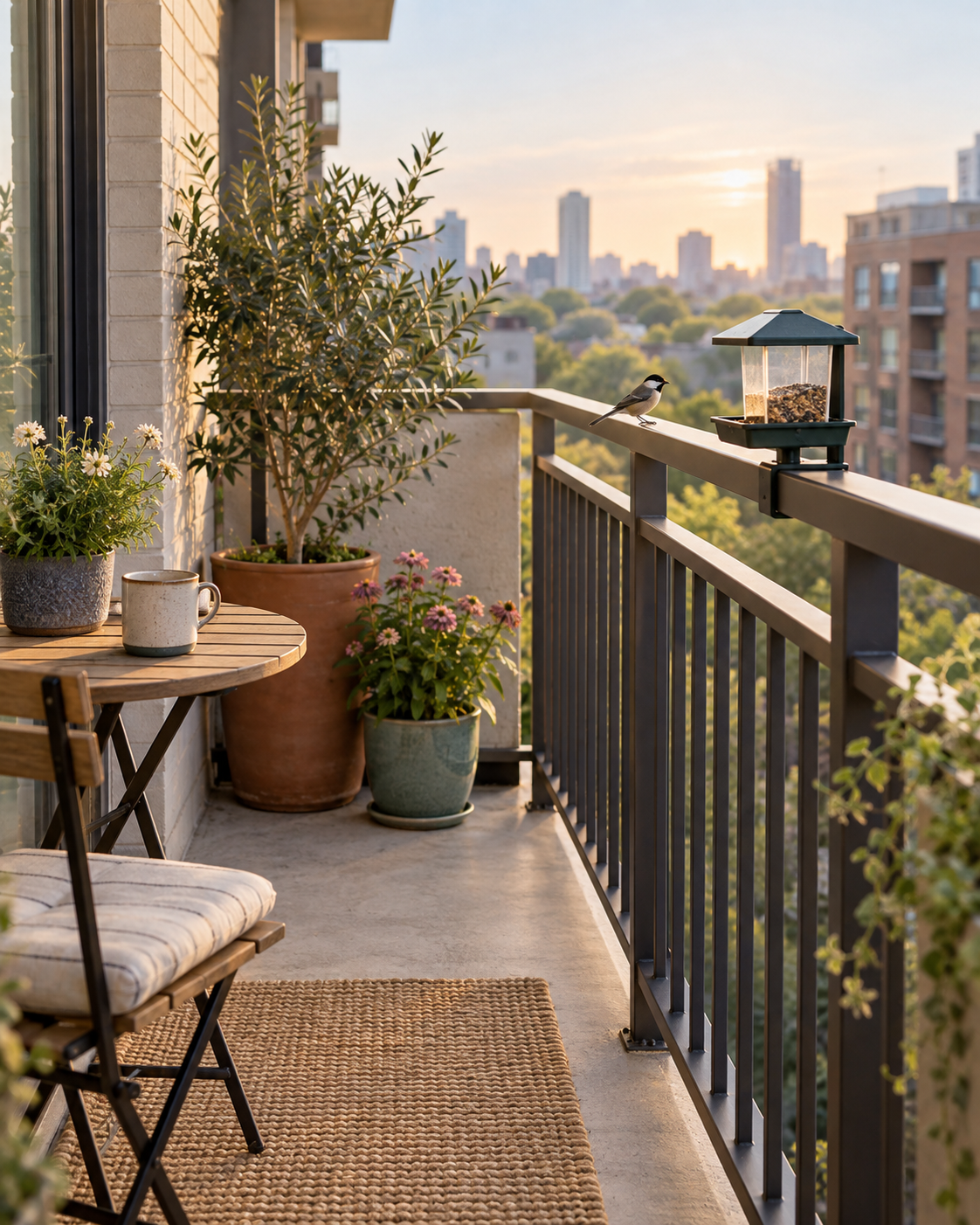
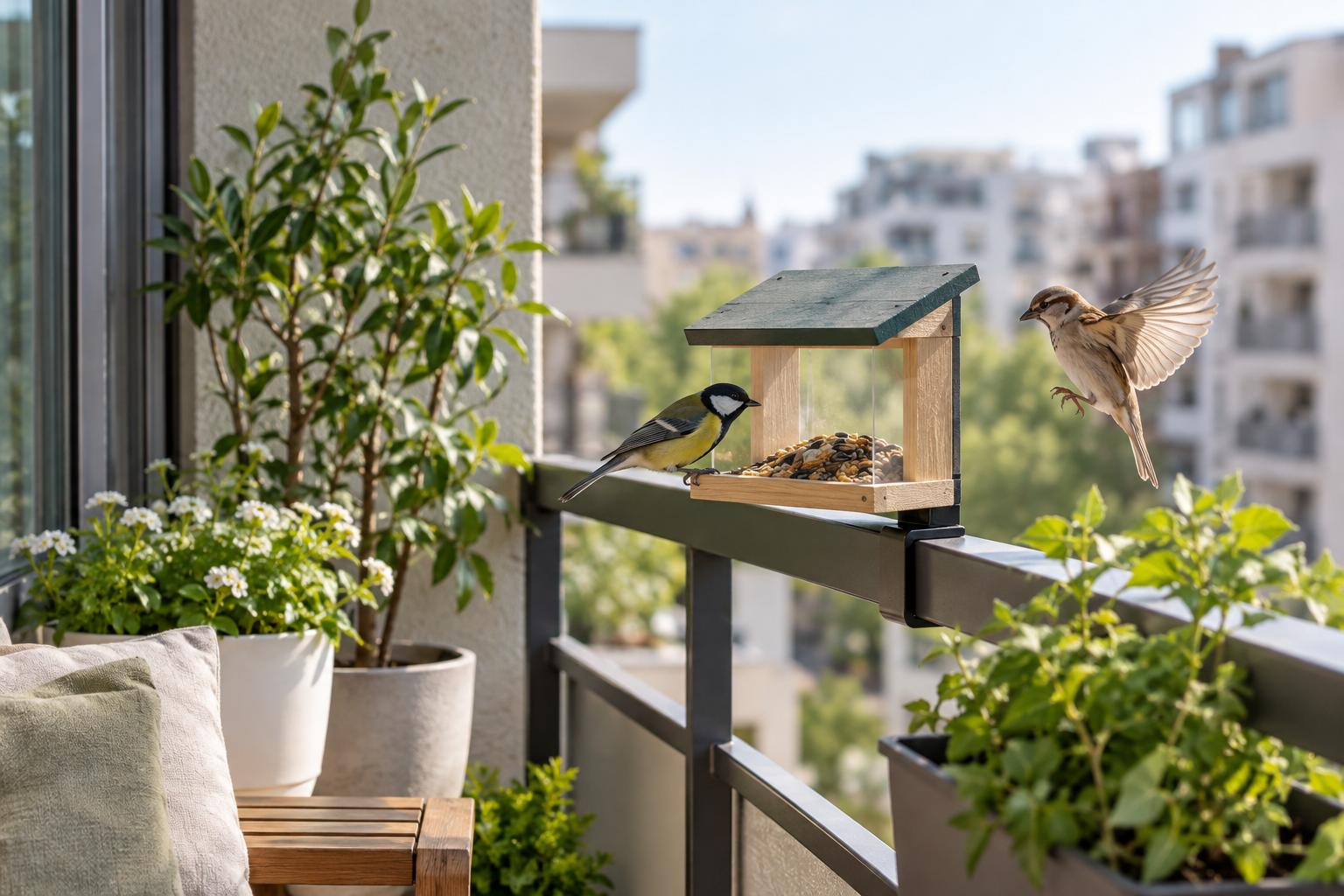
Place the feeder where you can see it from inside, but where birds have enough room to approach it. Avoid placing it in a crowded corner behind large furniture or plants.
A feeder that is easy for you to reach is also easier to keep clean. If you need to move furniture, lean too far over a railing, or use a difficult step each time you refill it, the setup may not be practical in the long term.
Choose a stable position that is protected from strong wind when possible. A feeder that swings or tips can scatter seed and make birds less likely to use it.
Prevent seed mess from building up
A small amount of fallen seed is normal, but it should not stay on the balcony. Check the area below the feeder often and remove loose seed, shells, or wet material before it collects.
If the feeder has a tray or catcher, empty it regularly. Do not assume that a tray removes the need for cleaning. It simply gives you a more controlled place to check.
For a step-by-step routine, see How to Keep Bird Seed From Falling on Your Apartment Balcony.
Keep the balcony calm and predictable
Birds may need time to become comfortable with a new feeder. Try not to move it from place to place every day. Once you find a safe location, keep the setup consistent for a while.
Refill the feeder at a regular time when possible. You do not need a large amount of seed to make the space useful. A small, reliable food source is easier to manage and helps you observe what works in your particular location.
Keep the surrounding area tidy. Remove food scraps, keep the feeder dry, and avoid leaving unused seed containers open outside.
Consider nearby neighbors and building rules
Apartment balconies are shared environments. Before setting up a feeder, check your building rules and consider whether seed, birds, or cleaning activities could affect people nearby.
A simple approach is usually best. Use one feeder, keep the amount of seed small, and clean the balcony regularly. This reduces the chance of complaints and helps you decide whether the setup works well in your building.
Be patient and adjust slowly
Some balconies receive more bird activity than others. Height, nearby trees, wind, window placement, and the surrounding buildings can all affect whether birds visit.
Give the setup time before making big changes. If you notice frequent spills, wet seed, or difficulty with cleaning, adjust one thing at a time. You may need to use less seed, move the feeder to a more protected area, or choose a smaller design.
A good balcony bird-feeding setup is not about attracting as many birds as possible. It is about creating a clean, safe space that you can enjoy and maintain.
Final thoughts
You can attract small birds to an apartment balcony with a simple feeder, suitable seed, and a regular routine. Start small, keep the area clean, and pay attention to how the balcony works for both birds and people.
Over time, a calm and well-maintained setup can make bird watching part of your everyday routine without creating unnecessary mess or stress.